Fridge Not Cooling? Complete Troubleshooting Guide for Toronto Homes
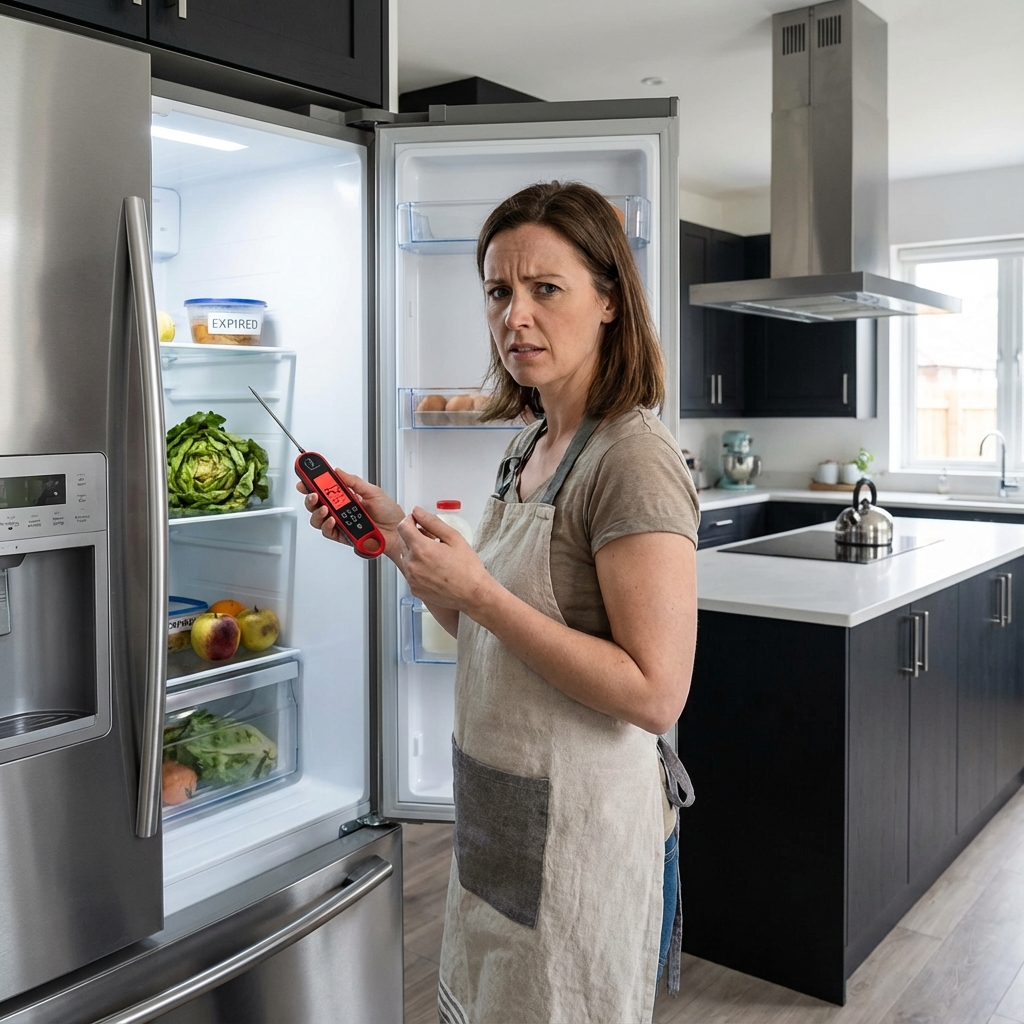
A refrigerator that's not cooling properly is every homeowner's nightmare, especially during Toronto's hot summers. Food spoilage, wasted groceries, and potential health risks make this an urgent problem. Here's your comprehensive guide to diagnosing and fixing cooling issues.
Quick Emergency Steps
If your fridge suddenly stops cooling:
- Check power supply - ensure it's plugged in and outlet works
- Verify temperature settings - should be 37-40°F (3-4°C)
- Clear air vents - remove any blocking items
- Check door seals - ensure doors close completely
- Listen for compressor - should hear humming/running sounds
If these don't help, continue with detailed troubleshooting below.
Common Causes of Cooling Problems
1. DIRTY CONDENSER COILS
Most common cause - dirty coils can't release heat effectively
- Location: Back or bottom of fridge
- Symptoms: Fridge runs constantly, warm interior
- Fix: Clean coils with vacuum and coil brush
2. FAULTY DOOR SEALS
Damaged gaskets let cold air escape
- Test: Close door on dollar bill - should be snug
- Symptoms: Frost buildup, higher energy bills
- Fix: Replace worn door seals
3. BLOCKED AIR VENTS
Overpacking prevents air circulation
- Location: Inside fridge and freezer compartments
- Symptoms: Uneven cooling, some areas warm
- Fix: Reorganize contents, maintain clearance
4. DEFROST SYSTEM FAILURE
Ice buildup blocks airflow
- Symptoms: Excessive frost, poor cooling
- Components: Defrost heater, timer, thermostat
- Fix: Professional repair usually required
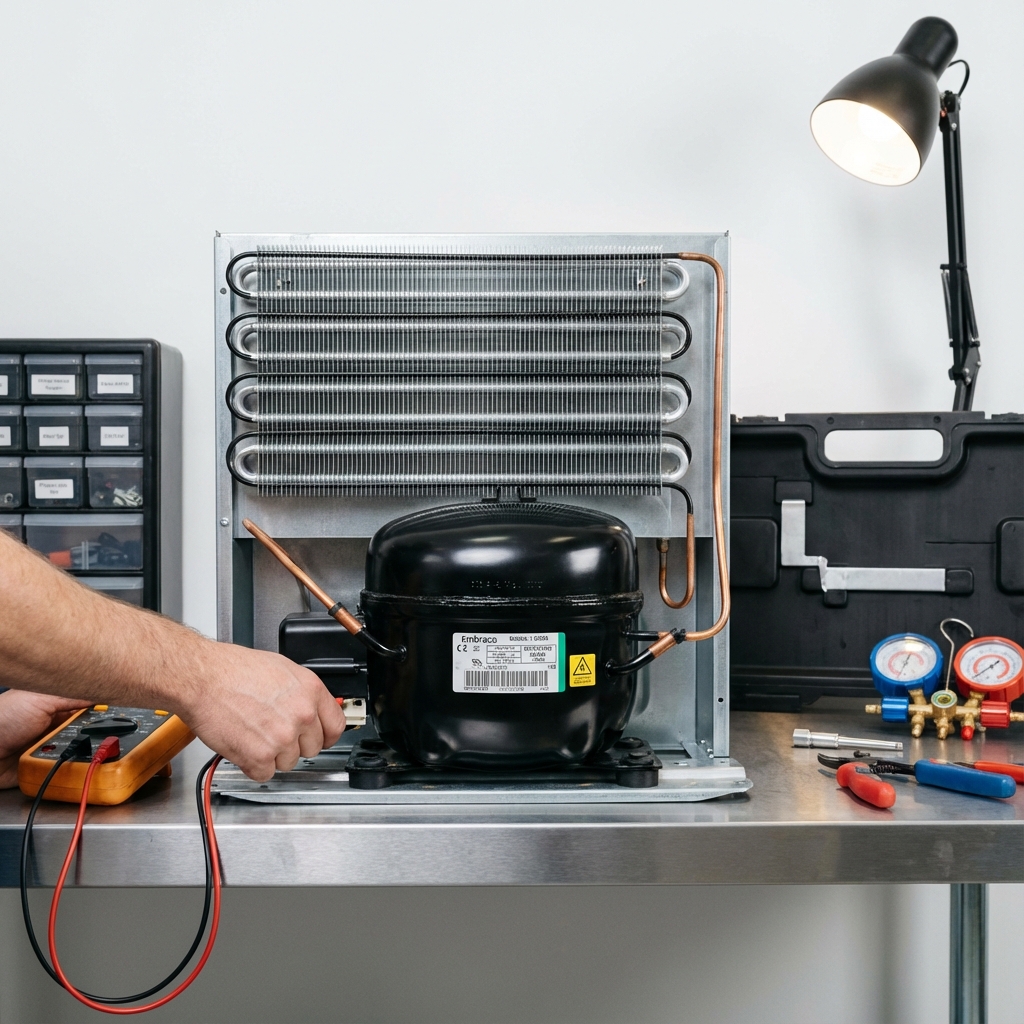
5. COMPRESSOR PROBLEMS
Heart of cooling system failing
- Symptoms: No cooling, unusual noises, hot compressor
- Causes: Age, electrical issues, refrigerant leaks
- Fix: Professional diagnosis and repair
6. THERMOSTAT MALFUNCTION
Temperature control not working
- Symptoms: Inconsistent temperatures, no cycling
- Test: Adjust settings and monitor response
- Fix: Thermostat replacement
7. EVAPORATOR FAN FAILURE
Fan not circulating cold air
- Symptoms: Freezer cold but fridge warm
- Location: Inside freezer compartment
- Fix: Fan motor replacement
Step-by-Step Troubleshooting
STEP 1: Basic Checks
- Confirm power supply and outlet function
- Check circuit breaker hasn't tripped
- Verify temperature settings (fridge: 37-40°F, freezer: 0-5°F)
- Ensure doors close properly and seals are intact
STEP 2: Airflow Assessment
- Remove items blocking air vents
- Check for ice buildup in freezer
- Ensure 1-2 inches clearance around vents
- Verify nothing is pressed against back wall
STEP 3: Condenser Coil Inspection
- Unplug refrigerator
- Locate coils (back or bottom)
- Vacuum away dust and debris
- Use coil brush for stubborn buildup
- Plug back in and wait 24 hours
STEP 4: Door Seal Testing
- Inspect gaskets for cracks or tears
- Perform dollar bill test on all door sections
- Clean seals with warm soapy water
- Check door alignment and hinges
STEP 5: Temperature Monitoring
- Place thermometer in fridge and freezer
- Monitor for 24 hours
- Note any temperature fluctuations
- Check if compressor cycles on/off
STEP 6: Listen for Sounds
- Normal: Gentle humming, occasional clicking
- Problem: Loud buzzing, grinding, no sounds at all
- Location: Note where sounds originate
DIY Fixes You Can Try
Clean Condenser Coils
Tools needed: Vacuum, coil brush, flashlight
- Unplug refrigerator
- Remove back panel or bottom grille
- Vacuum loose debris
- Brush coils gently
- Vacuum again
- Replace panels and plug in
Adjust Temperature Settings
- Set fridge to 37-40°F (3-4°C)
- Set freezer to 0-5°F (-18 to -15°C)
- Wait 24 hours for stabilization
- Avoid frequent adjustments
Reorganize Contents
- Don't overpack compartments
- Keep vents clear
- Store items properly (hot foods cool first)
- Maintain air circulation paths
Check and Clean Door Seals
- Inspect for damage or debris
- Clean with warm soapy water
- Dry thoroughly
- Apply thin layer of petroleum jelly if dry
- Test door closure
When to Call JK Appliances
Contact professionals immediately for:
- No cooling after 24 hours of troubleshooting
- Compressor not running or making loud noises
- Excessive ice buildup that won't clear
- Refrigerant leaks (oily residue, hissing sounds)
- Electrical issues or burning smells
- Multiple failed components
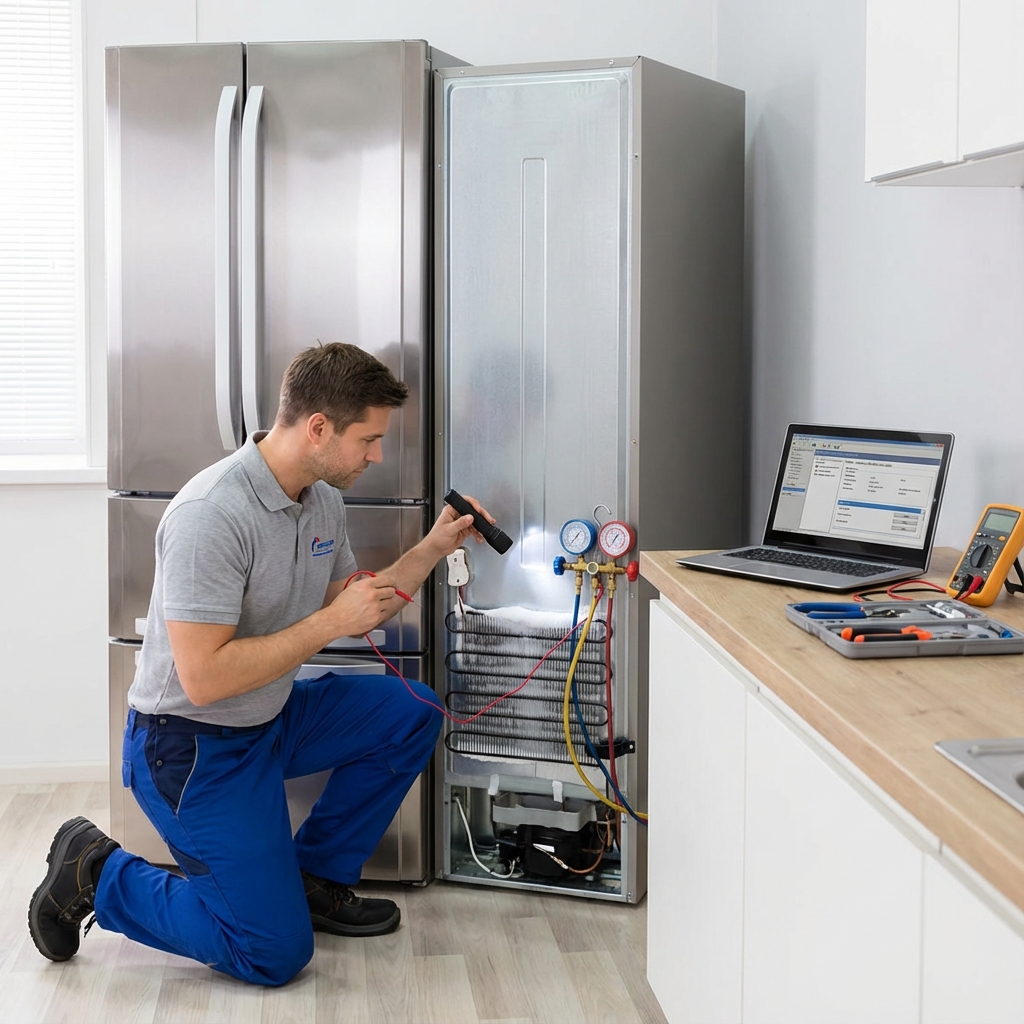
Our certified technicians can diagnose complex issues and provide same-day repairs.
Preventing Future Cooling Problems
Regular Maintenance
- Clean condenser coils every 6 months
- Check door seals monthly
- Monitor temperature settings
- Keep vents clear
- Schedule annual professional maintenance
Proper Usage
- Don't overload compartments
- Allow hot foods to cool before storing
- Keep doors closed as much as possible
- Maintain proper temperature settings
- Replace water filters on schedule
Environmental Factors
- Ensure adequate clearance around unit
- Keep away from heat sources
- Maintain stable room temperature
- Check that unit is level
Toronto-Specific Considerations
Summer Heat: Toronto's hot, humid summers make fridges work harder. During heat waves:
- Avoid opening doors frequently
- Check that AC keeps kitchen cool
- Monitor for overworking signs
Power Outages: Summer storms can cause outages. After power returns:
- Wait 5 minutes before plugging fridge back in
- Monitor temperatures for 24 hours
- Check for any damage from power surges
Condo Living: Limited ventilation in Toronto condos can affect fridge performance:
- Ensure adequate clearance around unit
- Keep kitchen well-ventilated
- Consider impact of other heat-generating appliances
Cost of Common Cooling Repairs
- Condenser coil cleaning: $100-150
- Door seal replacement: $150-300
- Thermostat replacement: $200-350
- Evaporator fan motor: $250-400
- Defrost system repair: $300-500
- Compressor replacement: $800-1200
Emergency Food Safety Tips
If your fridge isn't cooling:
- Keep doors closed to maintain temperature
- Use coolers with ice for perishables
- Check food temperatures with thermometer
- Discard items above 40°F for over 2 hours
- Don't refreeze thawed frozen foods
FAQ
Q: How long should I wait after troubleshooting before calling for service? A: Give it 24 hours for temperature stabilization. Call sooner if there's no improvement or you hear concerning sounds.
Q: Can I use my fridge if it's only slightly warm? A: No, food safety requires temperatures below 40°F. Use alternative cooling until repaired.
Q: Why is my freezer cold but fridge warm? A: This typically indicates evaporator fan failure or blocked air circulation between compartments.
Q: Should I unplug my fridge if it's not cooling? A: Only temporarily for cleaning coils. Otherwise, keep it plugged in so the compressor can attempt to work.
Q: How can I tell if my compressor is running? A: You should hear gentle humming and feel slight vibration. The compressor should be warm but not burning hot.
Don't let a warm fridge spoil your food and peace of mind. JK Appliances provides expert cooling system diagnosis and repair throughout Toronto. Emergency service available—call (647) 560-8966 or book online.