Oven Electrical Problems? Wiring & Power Issues Repair Guide Toronto
Electrical problems in ovens can range from simple power issues to complex wiring faults. When your oven won't turn on, trips breakers, or shows electrical symptoms, proper diagnosis is crucial for safe and effective repair. Here's your comprehensive guide to understanding and resolving oven electrical issues.
Quick Answer: Oven not getting power, tripping breakers, or electrical issues? Learn to diagnose and fix oven electrical problems. Expert electrical repair in Toronto from JK Appliances.
Common Oven Electrical Problems
OVEN WON'T TURN ON
Symptoms: No power, no lights, no display, completely dead Causes: Tripped breaker, blown fuse, faulty outlet, internal wiring issues Impact: Complete loss of oven function, inability to cook
CIRCUIT BREAKER TRIPPING
Symptoms: Breaker trips when oven turns on, repeated electrical faults Causes: Overloaded circuit, short circuit, ground fault, element failure Safety concern: Potential fire hazard, electrical shock risk
INTERMITTENT POWER LOSS
Symptoms: Oven works sometimes, random shutoffs, flickering display Causes: Loose connections, failing components, voltage fluctuations Result: Unreliable operation, cooking interruptions
PARTIAL ELECTRICAL FUNCTION
Symptoms: Some features work, others don't, display works but heating doesn't Causes: Component-specific failures, control board issues, wiring problems Effect: Limited oven functionality, specific feature loss
ELECTRICAL BURNING SMELL
Symptoms: Acrid odor, smoke from electrical components, sparking Causes: Overheating wires, component failure, insulation breakdown Danger: Fire risk, toxic fumes, electrical shock hazard
Understanding Oven Electrical Systems
POWER SUPPLY REQUIREMENTS
Voltage: 240V for most electric ovens, 120V for gas oven controls Amperage: 30-50 amps typical for electric ovens Circuit: Dedicated circuit required, proper grounding essential Outlet: NEMA 14-50 or 14-30 receptacles common
MAIN ELECTRICAL COMPONENTS
Control Board/PCB
Function: Central control for all oven operations Common failures: Power surges, component aging, moisture damage Symptoms: Erratic operation, no response to controls, error codes Replacement cost: $200-500
Heating Elements
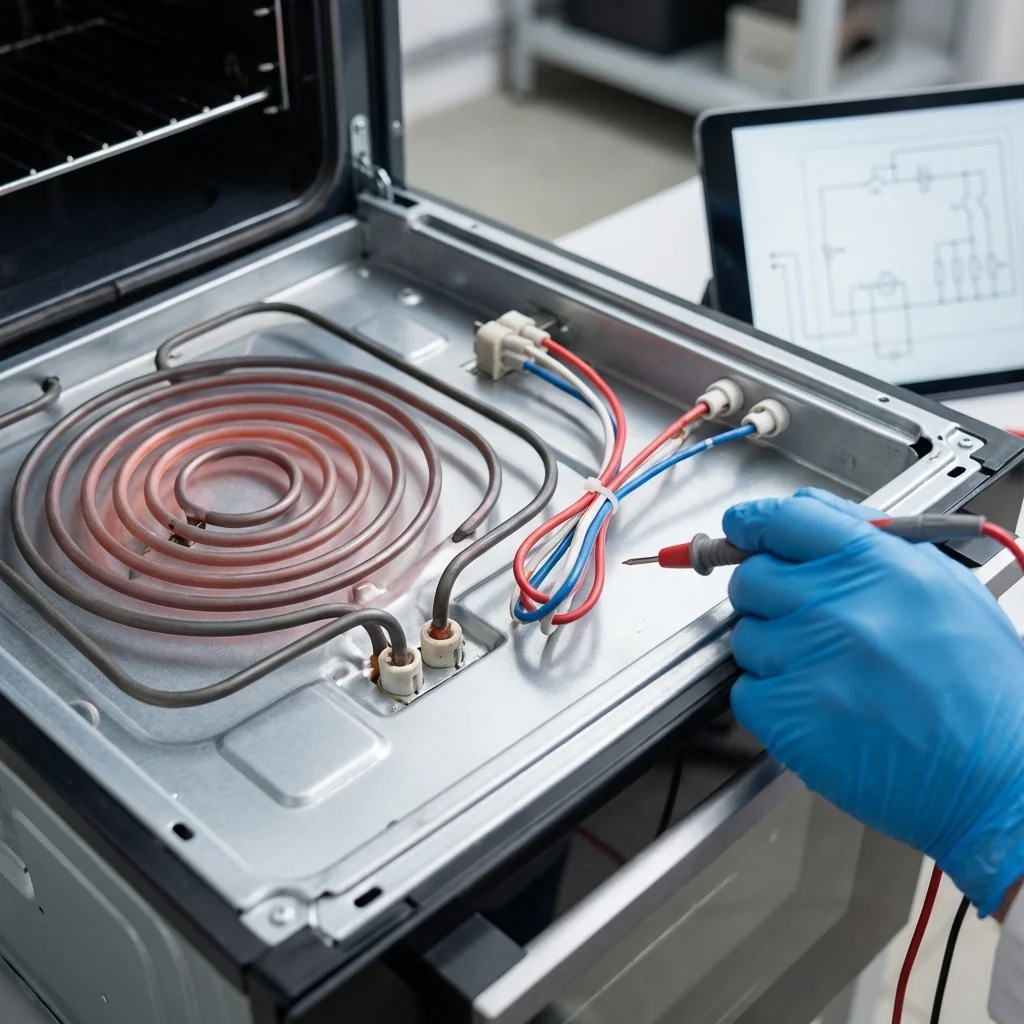
Types: Bake element (bottom), broil element (top), convection element Electrical load: 2000-5000 watts each Failure modes: Open circuit, short circuit, ground fault Testing: Resistance and continuity checks
Temperature Sensors
Purpose: Monitor oven temperature for control feedback Types: RTD (Resistance Temperature Detector), thermistor Problems: Drift, open circuit, short circuit Impact: Temperature control issues, error codes
Door Lock Assembly (Self-Clean)
Components: Lock motor, position switches, wiring harness Electrical issues: Motor failure, switch problems, wiring damage Safety function: Prevents door opening during high-heat cycles
WIRING SYSTEMS
Internal wiring: High-temperature rated, proper gauge for load Junction boxes: Secure connections, proper wire nuts Grounding: Essential for safety, prevents shock hazards Conduit: Protects wiring from heat and mechanical damage
Diagnosing Electrical Problems
SAFETY PRECAUTIONS
- Turn off power at circuit breaker before any electrical work
- Use lockout/tagout procedures
- Test circuits with proper meters
- Never work on live electrical systems
- Call professionals for complex electrical issues
BASIC ELECTRICAL TESTING
Power Supply Verification
- Check circuit breaker - should be firmly in ON position
- Test outlet voltage with multimeter (240V expected)
- Verify proper grounding - continuity to ground
- Check for loose connections at outlet
- Inspect power cord for damage
Component Testing
- Heating element resistance - should show continuity, specific ohm reading
- Temperature sensor - resistance varies with temperature
- Control board - complex, usually requires professional diagnosis
- Door switches - continuity when activated
Wiring Inspection
- Visual examination of all visible wiring
- Look for burn marks or discoloration
- Check wire connections for tightness
- Inspect insulation for cracks or damage
- Verify proper wire gauge for load
ADVANCED DIAGNOSTICS
Voltage Testing Under Load
- Measure voltage while oven operating
- Check for voltage drop during heating cycles
- Monitor amperage draw of components
- Test control voltages (24V, 12V, 5V systems)
Insulation Testing
- Megohm testing of heating elements
- Ground fault detection
- Wire insulation integrity checks
- Component isolation testing
Note: Advanced testing requires professional equipment and expertise.
DIY Troubleshooting
POWER SUPPLY ISSUES
Circuit Breaker Problems
- Reset tripped breaker firmly to OFF then ON
- Check for loose connections at panel
- Verify proper breaker size for oven requirements
- Look for signs of overheating at breaker
- Test breaker with load if equipped
Outlet and Cord Issues
- Inspect power cord for damage, burns, or wear
- Check outlet connections for tightness
- Test outlet voltage with multimeter
- Verify proper grounding at outlet
- Look for signs of overheating
Basic Connection Checks
- Turn off power at breaker
- Remove oven from cabinet if necessary
- Inspect junction box connections
- Check wire nuts for tightness
- Verify proper wire connections
COMPONENT TESTING
Heating Element Testing
- Disconnect power completely
- Remove element from oven
- Test resistance with multimeter (10-50 ohms typical)
- Check for continuity through element
- Test for ground faults (element to case)
Temperature Sensor Testing
- Locate sensor in oven cavity
- Disconnect sensor wiring
- Test resistance at room temperature
- Compare to specifications (1000-1100 ohms at 70°F typical)
- Check wiring for continuity
Door Switch Testing
- Locate door switches on oven frame
- Test continuity with door closed
- Verify switch opens when door opens
- Check wiring connections
- Test switch operation multiple times
Professional Repair Situations
CONTROL BOARD ISSUES
Complex problems requiring professional service:
- Multiple system failures
- Error codes requiring diagnostic equipment
- Software/firmware updates needed
- Integrated system malfunctions
Why professional needed:
- Specialized diagnostic equipment required
- Programming may be necessary
- Warranty considerations
- Complex troubleshooting procedures
HIGH-VOLTAGE ELECTRICAL WORK
Professional service required for:
- 240V circuit modifications
- Panel upgrades or changes
- New circuit installation
- Code compliance issues
SAFETY-CRITICAL REPAIRS
Professional expertise needed:
- Ground fault problems
- Arc fault issues
- Fire damage repair
- Insurance claim work
Common Issues by Oven Type
ELECTRIC OVENS
Typical electrical problems:
- Heating element failures
- High power consumption issues
- 240V supply problems
- Element control relay failures
Diagnostic approach:
- Voltage and amperage testing
- Element resistance checks
- Control system evaluation
GAS OVENS WITH ELECTRIC CONTROLS
Common electrical issues:
- 120V control circuit problems
- Ignition system failures
- Display and timer issues
- Safety system malfunctions
Repair considerations:
- Lower voltage systems
- Gas safety integration
- Ignition timing critical
CONVECTION OVENS
Electrical complexities:
- Fan motor electrical issues
- Multiple heating circuits
- Complex control systems
- Higher power requirements
DOUBLE OVENS
Unique electrical challenges:
- Dual control systems
- Higher total power requirements
- Complex wiring harnesses
- Load balancing issues
Safety Considerations
ELECTRICAL SAFETY RULES
- Always turn off power before working
- Use proper PPE - insulated tools, safety glasses
- Test circuits before touching
- Never bypass safety devices
- Follow lockout/tagout procedures
FIRE PREVENTION
- Don't overload circuits
- Use proper wire gauges
- Secure all connections
- Install arc fault protection where required
- Regular inspection of electrical components
SHOCK PREVENTION
- Proper grounding essential
- GFCI protection where required
- Dry hands and tools
- Insulated work surfaces
- Professional help for complex work
CODE COMPLIANCE
- Follow local electrical codes
- Obtain permits when required
- Use licensed electricians for major work
- Inspection requirements for new installations
Toronto Electrical Considerations
LOCAL ELECTRICAL CODES
ESA (Electrical Safety Authority) requirements:
- Permit requirements for major electrical work
- Licensed electrician requirements
- Inspection procedures
- Code compliance standards
POWER GRID CHARACTERISTICS
Toronto Hydro considerations:
- Voltage stability in older neighborhoods
- Power quality issues
- Outage frequency effects
- Load management programs
BUILDING TYPES
Older homes: May have outdated electrical systems requiring upgrades Condos: Shared electrical systems, building management involvement New construction: Modern electrical standards, better power quality
Cost Analysis
DIY REPAIRS
- Basic testing equipment: $50-150
- Replacement elements: $50-200
- Temperature sensors: $30-80
- Basic electrical supplies: $20-50
PROFESSIONAL REPAIRS
- Electrical diagnosis: $100-200
- Control board replacement: $300-600
- Wiring repairs: $200-500
- Circuit upgrades: $500-1500
ELECTRICAL UPGRADES
- New circuit installation: $300-800
- Panel upgrades: $1500-3000
- Outlet replacement: $150-300
- Code compliance work: $500-2000
Maintenance Tips
REGULAR INSPECTIONS
- Monthly visual checks of power cord
- Quarterly inspection of outlet connections
- Annual professional electrical inspection
- Immediate attention to any electrical symptoms
PREVENTIVE MEASURES
- Use surge protectors for sensitive electronics
- Avoid overloading circuits
- Keep electrical connections clean and tight
- Replace aging components proactively
ENVIRONMENTAL PROTECTION
- Control kitchen humidity
- Protect from temperature extremes
- Ensure adequate ventilation
- Keep electrical components dry
Troubleshooting Quick Reference
NO POWER TO OVEN
- Check circuit breaker - reset if tripped
- Test outlet voltage with multimeter
- Inspect power cord for damage
- Verify connections at junction box
BREAKER KEEPS TRIPPING
- Check for overloaded circuit
- Test heating elements for short circuits
- Inspect wiring for damage
- Call electrician if problem persists
INTERMITTENT OPERATION
- Check all connections for tightness
- Test components under load
- Monitor voltage during operation
- Look for loose or corroded connections
PARTIAL FUNCTION LOSS
- Identify which systems work/don't work
- Test specific components related to failed functions
- Check control board connections
- Verify proper voltage to components
When to Call Professionals
IMMEDIATE SERVICE NEEDED
- Electrical burning smell or smoke
- Sparking from electrical components
- Repeated breaker tripping
- Shock hazard suspected
COMPLEX ELECTRICAL ISSUES
- Multiple system failures
- Control board problems
- High-voltage circuit issues
- Code compliance requirements
SAFETY CONCERNS
- Ground fault problems
- Arc fault detection
- Fire damage assessment
- Insurance claim support
Prevention Strategies
PROPER INSTALLATION
- Use qualified electricians for installation
- Follow manufacturer specifications
- Ensure adequate circuit capacity
- Proper grounding essential
REGULAR MAINTENANCE
- Annual electrical inspection
- Keep connections clean and tight
- Replace aging components
- Monitor performance regularly
ENVIRONMENTAL CONTROL
- Maintain stable power supply
- Control moisture levels
- Protect from power surges
- Ensure adequate ventilation
FAQ
Q: Why does my oven keep tripping the circuit breaker? A: Usually indicates an overloaded circuit, short circuit, or failing heating element. Professional diagnosis recommended.
Q: Can I replace a heating element myself? A: Yes, if you're comfortable with basic electrical work and follow safety procedures. Turn off power first.
Q: Why does my oven work sometimes but not others? A: Suggests loose connections, failing components, or voltage issues. Requires systematic electrical testing.
Q: Is it normal for my oven to use a lot of electricity? A: Electric ovens are high-power appliances. Typical usage is 2000-5000 watts during heating cycles.
Q: Should I upgrade my electrical panel for a new oven? A: Depends on current panel capacity and oven requirements. Professional evaluation recommended.
Don't risk electrical safety! JK Appliances provides expert oven electrical repair throughout Toronto. Our licensed technicians safely diagnose and repair all electrical issues. Call (647) 560-8966 or book online for professional electrical service.