
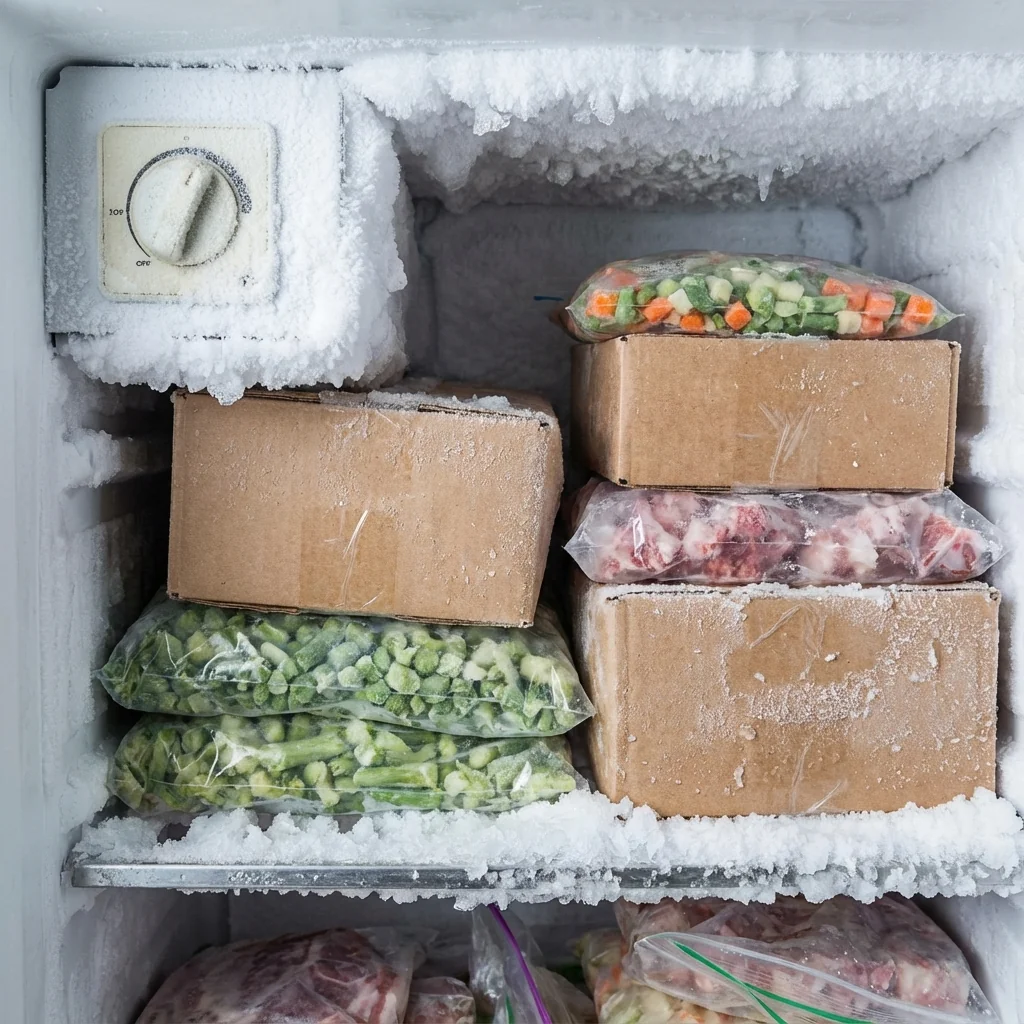
Refrigerator Too Cold? Fix Freezing Problems in Your Fridge
Finding frozen lettuce or rock-hard milk in your refrigerator? When your fridge runs too cold, it wastes energy and ruins fresh food. Here's what Toronto homeowners need to know about fixing this frustrating problem.
Quick Answer: Is your refrigerator freezing food? Learn why fridges run too cold and how to fix it. Expert Toronto appliance repair from JK Appliances.
Why Your Refrigerator Is Too Cold
Incorrect Temperature Setting
Someone accidentally adjusted the thermostat dial, or it shifted during cleaning.
Faulty Thermostat
The temperature control sensor isn't reading accurately, causing overcooling.
Damaged Damper Control
This regulates cold air flow from freezer to fridge. When stuck open, too much cold air enters.
Defective Temperature Sensor
Modern fridges use thermistors to monitor temperature. A faulty sensor sends incorrect signals.
Blocked Air Vents
Overpacking your fridge blocks vents, causing uneven cooling and cold spots.
Failed Control Board
The main control board may malfunction, ignoring temperature feedback.
DIY Fixes to Try First
1. Check the Temperature Dial
Your fridge should be set between 37-40°F (3-4°C). It's often on a scale of 1-5 or 1-9. Set it to mid-range and wait 24 hours.
2. Inspect Air Vents
Look for vents in the back wall of your fridge compartment. Ensure they're not blocked by food items. Maintain 2-3 inches clearance.
3. Test the Damper Control
Usually located where cold air enters from the freezer. Listen for it opening/closing. If stuck open, you'll hear constant airflow.
4. Reorganize Contents
Remove excess items. An overpacked fridge disrupts airflow and creates cold pockets.
5. Monitor for 48 Hours
After adjustments, use a fridge thermometer to track actual temperatures. They're more accurate than built-in displays.
When Professional Help Is Needed
Call JK Appliances if:
- Temperature settings don't change cooling behavior
- You see frost buildup in fresh food compartment
- The damper control is visibly damaged
- Your fridge has no manual temperature dial
- Ice crystals form on walls or food
- The problem recurs after adjustments
Our certified technicians carry replacement thermostats, damper controls, and sensors on their trucks for same-day repairs.
Prevention Strategies
- Don't adjust temperature settings drastically—make small increments
- Avoid overpacking your refrigerator
- Check door seals monthly for proper closure
- Keep fridge 70% full for optimal air circulation
- Clean condenser coils twice yearly
- Install a fridge thermometer for accurate monitoring
Toronto Climate Considerations
Toronto's cold winters can affect basement or garage fridges. When ambient temperature drops below 60°F, some fridges struggle with temperature regulation. If you have a secondary fridge in an unheated space, consider a "garage kit" upgrade from JK Appliances.
Frequently Asked Questions About a Refrigerator That's Too Cold
Q: What temperature should my fridge be set to? A: Between 37-40°F (3-4°C) for the refrigerator section and 0°F (-18°C) for the freezer.
Q: Why is only part of my fridge too cold? A: Blocked air vents or a failing damper control create cold zones. The damper may be stuck partially open.
Q: Can a power outage cause temperature problems? A: Yes, power surges can damage control boards. If problems started after an outage, the control board likely needs inspection.
Q: How much does it cost to fix a fridge that's too cold? A: Simple thermostat replacements start around $150-250. Control board repairs may run $200-400. JK Appliances provides transparent pricing after diagnosis.
Q: Why is my refrigerator freezing food even on the warmest setting? A: On most single-evaporator fridges — including the majority of Whirlpool, Frigidaire and GE top-mount and side-by-side models — one evaporator in the freezer supplies both compartments, and an air damper meters how much cold air crosses into the fresh-food side. If the damper's foam seal tears or its motor sticks open, freezer air pours in no matter what number you select. A misreading thermistor causes the same symptom by telling the control board the fridge is warmer than it really is. Confirm before buying parts: stand a glass of water on a middle shelf with a thermometer in it and read it after 4-6 hours. If it sits below 2°C while the panel is set near 4°C, the damper or sensor is at fault, not your setting.
Q: Can a fridge that is too empty or too full freeze food? A: Both extremes cause it. An almost-empty refrigerator has very little thermal mass, so each time the compressor runs the air temperature swings much further below the setpoint before the sensor catches up, and items nearest the vent freeze. Overpacking causes the opposite failure: produce and containers pressed against the rear air outlet block circulation, so the air that does escape is concentrated on whatever sits directly in front of it. Aim to keep the cabinet roughly two-thirds full, leave a few centimetres of clearance in front of the rear vents, and keep delicate items such as lettuce, milk and eggs out of the direct airflow path rather than pushed to the back wall.
Q: Why does food freeze only on the back wall or the bottom shelf? A: Those are the two coldest spots in almost every refrigerator, so they show damper and sensor faults first. The rear wall sits directly in front of the cold-air outlet, and in top-mount designs the densest, coldest air settles onto the bottom shelf and crisper. Lettuce, berries and milk left touching the back panel routinely freeze even in a unit that is working correctly. Before assuming a fault, move those items forward and away from the vent for a few days. If they still freeze, or if items in the middle of the cabinet also ice up, the damper, thermistor or control board needs testing.
Q: Could a worn door seal make my fridge run too cold rather than too warm? A: Yes, and it catches people out because they expect the opposite. A leaking gasket lets warm, humid room air into the cabinet near the door. The sensor registers that warmth and the control responds by running the compressor longer and pushing more cold air through the vents, which overcools the zones nearest the outlet even while the door area itself stays warm. The giveaway signs are frost or ice forming on the rear panel, a compressor that seldom shuts off, and condensation around the door frame. Test the seal by closing the door on a banknote: if it slides out with almost no resistance anywhere along the edge, the gasket needs replacing.
Don't waste food to freezer burn! Contact JK Appliances for expert refrigerator repair in Toronto. Same-day service available—call (647) 560-8966 or book online.
![Refrigerator Compressor Not Working? Complete Repair Guide for Toronto Homeowners [2025]](/images/blog/refrigerator/fridge_compressor_1765552159517.webp)