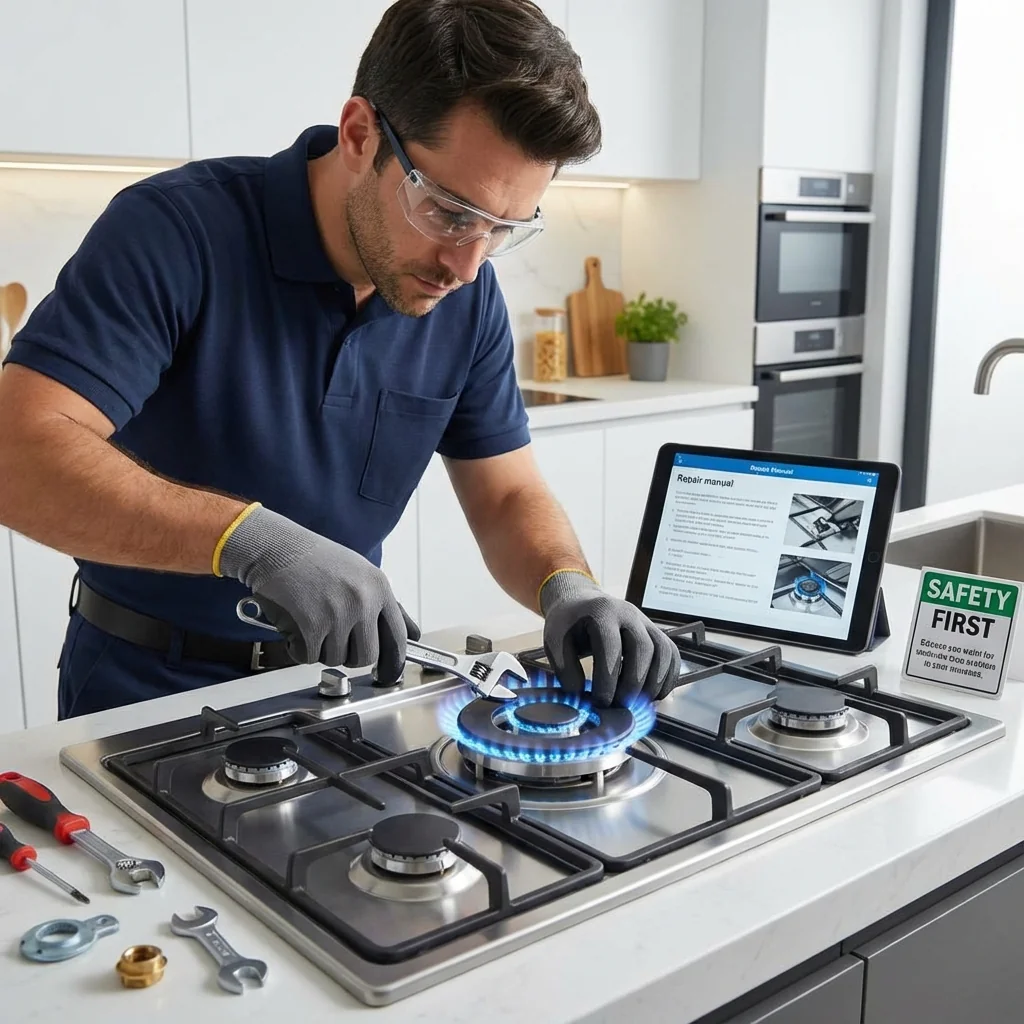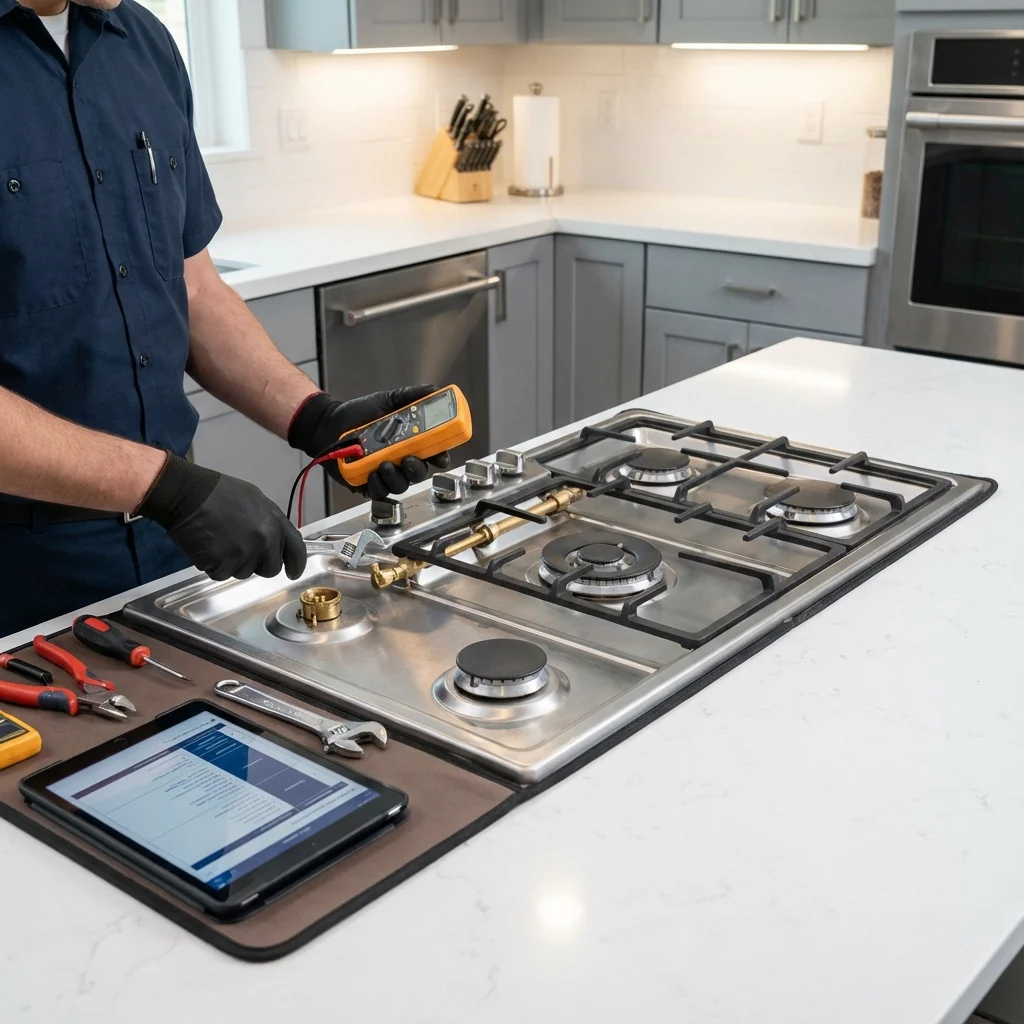

Gas Stove Cleaning & Maintenance Guide Toronto
Proper cleaning and maintenance of your gas stove ensures safe operation, optimal performance, and extended appliance life. Regular care prevents costly repairs, maintains efficiency, and keeps your kitchen looking its best. This comprehensive guide covers everything you need to know about maintaining your gas stove in Toronto's unique environment.
Quick Answer: Complete gas stove cleaning and maintenance guide for Toronto homeowners. Learn proper cleaning techniques, maintenance schedules, and care tips to extend your stove's life and ensure safe operation.
Understanding Your Gas Stove Components
REMOVABLE COMPONENTS
Burner grates: Cast iron or steel supports for cookware Drip pans: Catch spills and protect burner area Burner caps: Cover and protect burner heads Burner heads: Distribute gas for even flame Control knobs: User interface for gas control
FIXED COMPONENTS
Cooktop surface: Main cooking surface around burners Control panel: Houses knobs and controls Igniter systems: Electronic spark generators Gas valves: Internal gas flow control Ventilation areas: Air intake and exhaust zones
SAFETY COMPONENTS
Gas connections: Supply lines and fittings Safety shutoffs: Emergency gas control Ignition systems: Safe lighting mechanisms Ventilation systems: Proper air circulation
Daily Cleaning Routine
IMMEDIATE SPILL CLEANUP
Why it matters:
- Prevents staining and buildup
- Reduces fire hazards
- Maintains appliance appearance
- Prevents odor development
Immediate action steps:
- Turn off burner and allow cooling
- Remove excess spill with paper towel
- Clean with appropriate cleaner
- Dry thoroughly before next use
AFTER-COOKING CLEANUP
Cooktop surface:
- Allow stove to cool completely
- Wipe surface with damp cloth
- Use mild detergent for stubborn spots
- Dry with clean, lint-free cloth
Control area:
- Clean around control knobs
- Wipe control panel gently
- Avoid getting moisture in controls
- Polish stainless steel if applicable
BURNER AREA MAINTENANCE
Quick daily check:
- Remove food debris from burner ports
- Wipe burner caps if removable
- Check for proper burner alignment
- Ensure igniters are clean and dry
Weekly Deep Cleaning
REMOVABLE COMPONENT CLEANING
Burner Grates
Cleaning method:
- Remove grates when cool
- Soak in warm, soapy water
- Scrub with non-abrasive brush
- Rinse thoroughly and dry completely
- Season cast iron grates if needed
For stubborn buildup:
- Use baking soda paste
- Apply degreasing cleaner
- Use plastic scraper for stuck-on food
- Avoid harsh abrasives that damage finish
Drip Pans
Standard cleaning:
- Remove pans carefully
- Soak in hot, soapy water
- Clean with degreasing agent
- Scrub gently with soft brush
- Rinse and dry completely
Heavy-duty cleaning:
- Use ammonia solution for grease
- Apply baking soda for odor removal
- Use specialized degreaser for tough buildup
- Replace if severely damaged or warped
Burner Caps and Heads
Cleaning procedure:
- Remove caps and heads when cool
- Soak in warm, soapy water
- Clean ports with thin wire or toothpick
- Rinse thoroughly to remove all soap
- Dry completely before reassembly
Port cleaning technique:
- Use thin wire to clear each port
- Avoid enlarging ports with cleaning tools
- Use compressed air to blow out debris
- Ensure all ports are completely clear
COOKTOP SURFACE CLEANING
Glass or Ceramic Surfaces
Daily maintenance:
- Use specialized cooktop cleaner
- Apply with soft cloth or sponge
- Remove with clean, damp cloth
- Polish with dry microfiber cloth
Weekly deep clean:
- Apply cooktop cleaner generously
- Let sit for recommended time
- Scrape gently with plastic scraper
- Wipe clean with damp cloth
- Polish to restore shine
Stainless Steel Surfaces
Cleaning direction:
- Always wipe with the grain
- Use stainless steel cleaner
- Avoid circular motions
- Finish with microfiber cloth
Cleaning process:
- Remove surface debris
- Apply stainless steel cleaner
- Wipe in direction of grain
- Buff with clean, dry cloth
- Apply protective coating if desired
CONTROL AREA MAINTENANCE
Control Knobs
Removal and cleaning:
- Pull off knobs carefully
- Wash in warm, soapy water
- Clean valve stems with damp cloth
- Dry thoroughly before reinstalling
- Ensure proper alignment when replacing
Control Panel
Cleaning procedure:
- Use mild cleaner appropriate for surface
- Avoid getting moisture in controls
- Clean around buttons and displays
- Dry immediately with soft cloth
- Polish if stainless steel finish
Monthly Maintenance Tasks
COMPREHENSIVE INSPECTION
Gas Connection Check
Visual inspection:
- Look for corrosion or damage
- Check connection tightness
- Inspect flexible connectors
- Verify proper support and routing
Safety testing:
- Apply soap solution to connections
- Look for bubble formation
- Check for gas odors
- Ensure proper ventilation
Igniter System Maintenance
Cleaning procedure:
- Disconnect power to stove
- Clean igniter with soft brush
- Remove grease and debris
- Check for cracks or damage
- Verify proper positioning
Testing:
- Reconnect power
- Test each burner ignition
- Listen for proper clicking
- Observe spark generation
- Note any irregular operation
VENTILATION SYSTEM CARE
Range Hood Integration
If connected to range hood:
- Clean hood filters regularly
- Check exhaust fan operation
- Ensure proper ventilation flow
- Maintain adequate clearances
Natural Ventilation
Kitchen airflow:
- Keep air vents unobstructed
- Ensure adequate room ventilation
- Check for proper air circulation
- Monitor for combustion air supply
PERFORMANCE OPTIMIZATION
Flame Quality Check
Proper flame characteristics:
- Blue flames with defined inner cones
- Stable flame pattern
- No yellow tips or lifting
- Consistent flame around burner
Adjustment needs:
- Air shutter calibration
- Gas pressure verification
- Burner alignment check
- Control valve operation
Efficiency Assessment
Performance indicators:
- Heating speed and consistency
- Fuel consumption patterns
- Cooking results quality
- Unusual sounds or behaviors
Seasonal Maintenance
SPRING PREPARATION
After winter usage:
- Deep clean all components
- Inspect for winter damage
- Check gas connections
- Test all safety systems
- Schedule professional inspection if needed
SUMMER CONSIDERATIONS
Reduced usage period:
- Clean thoroughly before storage
- Check for pest intrusion
- Maintain ventilation systems
- Perform preventive maintenance
FALL PREPARATION
Before heavy usage:
- Complete comprehensive cleaning
- Test all burner functions
- Verify safety systems
- Stock cleaning supplies
- Schedule professional service if needed
WINTER MAINTENANCE
Heavy usage period:
- Increase cleaning frequency
- Monitor for increased wear
- Ensure adequate ventilation
- Watch for condensation issues
Toronto-Specific Considerations
CLIMATE FACTORS
Humidity Effects
High humidity periods:
- Increased corrosion risk
- Moisture in ignition systems
- Condensation issues
- Mold and mildew prevention
Low humidity periods:
- Static electricity concerns
- Dust accumulation
- Dry air effects on seals
- Increased fire risk
Temperature Variations
Thermal cycling:
- Expansion and contraction effects
- Connection stress
- Seal integrity
- Component alignment
URBAN ENVIRONMENT IMPACTS
Air Quality Considerations
City air pollutants:
- Increased surface contamination
- Filter clogging acceleration
- Corrosion acceleration
- Cleaning frequency adjustment
Water Quality Effects
Toronto water characteristics:
- Mineral content in cleaning
- Spot prevention techniques
- Cleaning product selection
- Rinse water quality
BUILDING-SPECIFIC FACTORS
Condo/Apartment Considerations
Ventilation limitations:
- Reduced natural airflow
- Shared ventilation systems
- Neighbor cooking odors
- Building maintenance coordination
House-Specific Issues
Individual home factors:
- Private ventilation control
- Seasonal usage patterns
- Maintenance scheduling flexibility
- Upgrade possibilities
Cleaning Products and Tools
RECOMMENDED CLEANING PRODUCTS
General Cleaners
All-purpose cleaners: Mild, non-abrasive formulations Degreasers: For heavy grease buildup Stainless steel cleaners: Specialized for metal surfaces Glass cleaners: For glass or ceramic cooktops
Specialized Products
Cooktop cleaners: Designed for specific surface types Burner cleaners: Heavy-duty for burner components Natural alternatives: Baking soda, vinegar, lemon Commercial degreasers: For professional-level cleaning
ESSENTIAL CLEANING TOOLS
Basic Tools
Microfiber cloths: Lint-free cleaning and polishing Soft brushes: For detailed cleaning Plastic scrapers: For stuck-on food removal Spray bottles: For cleaner application
Specialized Tools
Thin wire or needles: For port cleaning Compressed air: For debris removal Non-abrasive sponges: For gentle scrubbing Protective gloves: For hand protection
PRODUCTS TO AVOID
Harmful Cleaners
Abrasive cleaners: Can damage surfaces Bleach-based products: May damage finishes Ammonia on aluminum: Causes corrosion Steel wool: Scratches most surfaces
Inappropriate Tools
Metal scrapers: Can scratch and damage Harsh brushes: May damage delicate components Power tools: Unnecessary and potentially damaging Chemical solvents: May damage seals and finishes
Safety Considerations
CLEANING SAFETY PROTOCOLS
Before Cleaning
- Turn off all gas controls
- Disconnect power if needed
- Allow complete cooling
- Ensure adequate ventilation
- Gather appropriate supplies
During Cleaning
Safety practices:
- Wear protective gloves
- Use appropriate cleaners
- Avoid electrical components
- Maintain good ventilation
- Keep cleaning products away from heat sources
After Cleaning
Reassembly safety:
- Ensure all components are dry
- Reassemble in correct order
- Check proper alignment
- Test operation before use
- Verify safety systems function
GAS SAFETY DURING MAINTENANCE
Gas Shutoff Procedures
When to shut off gas:
- Deep cleaning of burner components
- Any work near gas connections
- Suspected gas leaks
- Extended cleaning periods
How to shut off:
- Turn off individual burner controls
- Close appliance shutoff valve if needed
- Know location of main gas shutoff
- Verify gas is off before proceeding
Leak Prevention
After maintenance:
- Check all connections
- Apply soap test to fittings
- Verify proper assembly
- Test for gas odors
Troubleshooting Common Issues
CLEANING-RELATED PROBLEMS
Streaking on Surfaces
Causes: Wrong cleaner, dirty cloths, improper technique Solutions: Use appropriate cleaner, clean cloths, proper wiping direction
Residue Buildup
Causes: Incomplete rinsing, wrong products, inadequate cleaning Solutions: Thorough rinsing, product change, increased frequency
Component Damage
Causes: Harsh cleaners, improper tools, excessive force Solutions: Gentle products, appropriate tools, careful handling
PERFORMANCE ISSUES AFTER CLEANING
Poor Ignition
Possible causes: Wet igniters, misaligned components, clogged ports Solutions: Complete drying, proper reassembly, thorough cleaning
Uneven Flames
Possible causes: Clogged ports, improper assembly, damaged components Solutions: Port clearing, correct installation, component inspection
Gas Odors
Possible causes: Loose connections, damaged seals, improper assembly Solutions: Connection check, seal inspection, professional service
Professional Maintenance Services
WHEN TO CALL PROFESSIONALS
Annual Inspections
Comprehensive service:
- Complete safety inspection
- Performance optimization
- Preventive maintenance
- Component replacement
Complex Issues
Professional requirements:
- Gas system problems
- Electrical issues
- Safety system failures
- Warranty service
PROFESSIONAL SERVICE BENEFITS
Expertise and Equipment
Specialized knowledge: Proper procedures and safety protocols Professional tools: Specialized equipment for thorough service Quality parts: OEM components and materials Safety compliance: Code requirements and standards
Comprehensive Service
Complete inspection: All systems and components Performance optimization: Calibration and adjustment Safety verification: All safety systems tested Documentation: Service records and recommendations
Cost-Effective Maintenance
DIY MAINTENANCE SAVINGS
Supply Costs
Basic cleaning supplies: $30-50 annually Specialized tools: $50-100 one-time investment Replacement parts: $25-75 as needed Professional products: $40-80 for quality cleaners
Time Investment
Daily cleaning: 5-10 minutes Weekly deep clean: 30-45 minutes Monthly maintenance: 1-2 hours Seasonal service: 2-3 hours
PROFESSIONAL SERVICE COSTS
Routine Maintenance
Annual inspection: $150-250 Deep cleaning service: $200-350 Performance optimization: $175-300 Safety inspection: $100-200
Cost-Benefit Analysis
DIY vs. professional:
- Regular DIY maintenance reduces professional service needs
- Professional service catches problems early
- Combined approach provides optimal results
- Prevention costs less than repairs
If burners still light unevenly after a deep clean, the ports or igniters need servicing rather than more scrubbing. Book a stove service.
FAQ
Q: How often should I deep clean my gas stove? A: Perform weekly deep cleaning of removable components and monthly comprehensive maintenance. Daily cleanup prevents buildup and reduces deep cleaning needs.
Q: Can I put burner grates in the dishwasher? A: Check manufacturer recommendations. Some grates are dishwasher-safe, while others (especially cast iron) should be hand-washed to prevent damage.
Q: What's the best way to clean burner ports? A: Use a thin wire or needle to gently clear each port, followed by compressed air to remove debris. Never use toothpicks that might break off inside.
Q: How do I know if my stove needs professional maintenance? A: Schedule professional service if you notice gas odors, ignition problems, uneven flames, or if it's been more than a year since the last inspection.
Q: What cleaning products should I avoid on my gas stove? A: Avoid abrasive cleaners, bleach, ammonia on aluminum parts, and any products not recommended by the manufacturer.
Q: Why do my burner flames turn yellow after cleaning? A: Yellow flames after cleaning usually indicate water in the gas system or misaligned components. Ensure everything is completely dry and properly reassembled.
Keep your gas stove running safely and efficiently! For professional maintenance and cleaning services in Toronto, contact JK Appliances. Our certified technicians provide comprehensive stove maintenance to extend appliance life and ensure safe operation. Call (647) 560-8966 to schedule your maintenance service!