Gas Appliance Won't Ignite - Professional Ignition Repair Toronto
When gas appliances fail to ignite or light properly, it disrupts your daily routine and can indicate serious safety concerns. From pilot light problems and electronic ignition failures to gas supply issues and control malfunctions, ignition problems require expert diagnosis and repair. This comprehensive guide covers understanding ignition systems, troubleshooting common problems, safety considerations, and professional repair solutions for Toronto homeowners.
Quick Answer: Gas appliance won't light or ignite? Expert ignition system repair in Toronto for all gas appliances. Professional diagnosis and repair from JK Appliances for reliable ignition.
Understanding Gas Appliance Ignition Systems
TYPES OF IGNITION SYSTEMS
Standing Pilot Systems
Traditional pilot light operation:
- Continuous small flame burns 24/7
- Thermocouple generates electrical signal from pilot heat
- Gas valve stays open while pilot flame is detected
- Main burner lights from pilot flame when called for heat
- Simple, reliable system used in older appliances
Components of pilot systems:
- Pilot burner: Small gas burner with adjustable flame
- Thermocouple: Heat-sensitive electrical generator
- Pilot gas line: Dedicated gas supply to pilot
- Safety valve: Gas shutoff when pilot flame is lost
- Manual controls: Pilot lighting and adjustment controls
Electronic Ignition Systems
Modern ignition technology:
- Hot surface ignition: Electrical element heats to ignite gas
- Spark ignition: Electrical spark lights gas on demand
- Direct spark: Spark directly at main burner
- Intermittent pilot: Electronic pilot lights only when needed
- Smart ignition: Advanced electronic control systems
Electronic system advantages:
- Energy efficiency: No continuous pilot flame
- Reliability: Fewer mechanical components
- Safety: Advanced flame monitoring and control
- Convenience: Automatic operation and restart
- Precision: Accurate timing and control
IGNITION SYSTEM COMPONENTS
Gas Supply Components
Fuel delivery system:
- Main gas valve: Primary gas flow control
- Pilot gas valve: Pilot flame gas control
- Gas manifold: Gas distribution to burners
- Orifices: Precise gas flow control
- Regulators: Gas pressure control
Electrical Components
Electronic ignition elements:
- Ignition control module: Electronic brain of system
- Flame sensor: Detects presence of flame
- Hot surface igniter: Electrical heating element
- Spark electrode: Creates ignition spark
- Wiring harness: Electrical connections
Safety Components
Protective system elements:
- Flame rollout switches: Detect dangerous flame conditions
- Limit switches: Temperature and pressure protection
- Pressure switches: Airflow and draft verification
- Lockout controls: Safety shutdown systems
- Manual reset devices: Safety system restoration
IGNITION SEQUENCE OPERATION
Standing Pilot Ignition Process
Traditional pilot system operation:
- Manual pilot lighting: Gas valve opened, pilot manually lit
- Thermocouple heating: Pilot flame heats thermocouple
- Safety circuit: Thermocouple generates holding voltage
- Main valve operation: Thermostat calls for heat
- Main burner ignition: Gas flows to main burner, lights from pilot
Electronic Ignition Sequence
Modern electronic ignition process:
- Call for heat: Thermostat signals for heating
- Pre-purge: Blower operates to clear combustion chamber
- Ignition attempt: Hot surface igniter heats or spark generated
- Gas valve opening: Main gas valve opens for ignition
- Flame establishment: Flame sensor confirms ignition
- Normal operation: System continues heating cycle
Safety Shutdown Procedures
Protective system operation:
- Flame failure: Immediate gas shutoff if flame lost
- Ignition failure: Limited retry attempts before lockout
- Safety lockout: System shutdown for safety violations
- Manual reset: Required intervention after safety shutdown
- Diagnostic codes: Error indication for troubleshooting
Common Ignition Problems
PILOT LIGHT ISSUES
Pilot Won't Light
Common pilot lighting problems:
- No gas to pilot: Gas supply or valve problems
- Clogged pilot orifice: Debris blocking gas flow
- Air in gas lines: Gas supply contamination
- Improper pilot adjustment: Flame size or position wrong
- Damaged pilot assembly: Physical damage to components
Pilot Won't Stay Lit
Pilot flame stability problems:
- Faulty thermocouple: Inadequate electrical generation
- Dirty thermocouple: Poor heat transfer and signal
- Loose connections: Electrical connection problems
- Gas pressure issues: Inadequate or excessive pressure
- Draft problems: Air currents extinguishing pilot
Weak or Yellow Pilot Flame
Pilot flame quality issues:
- Clogged air ports: Insufficient combustion air
- Dirty pilot burner: Debris affecting flame quality
- Gas pressure problems: Low pressure reducing flame
- Orifice problems: Wrong size or partially blocked
- Combustion air issues: Inadequate air supply
ELECTRONIC IGNITION FAILURES
Hot Surface Igniter Problems
HSI ignition issues:
- Cracked igniter: Physical damage preventing heating
- Weak igniter: Insufficient heat for gas ignition
- Electrical problems: Power supply or wiring issues
- Contamination: Dirt or debris on igniter surface
- Age-related failure: Normal wear and deterioration
Spark Ignition Issues
Spark system problems:
- No spark: Electrical or control module problems
- Weak spark: Insufficient voltage or poor connections
- Wrong spark gap: Electrode spacing problems
- Dirty electrodes: Contamination preventing spark
- Grounding issues: Electrical grounding problems
Flame Sensor Problems
Flame detection issues:
- Dirty flame sensor: Contamination preventing detection
- Failed sensor: Electrical failure of sensing element
- Poor positioning: Sensor not in flame properly
- Wiring problems: Electrical connection issues
- Control module failure: Electronic control problems
GAS SUPPLY PROBLEMS
No Gas Flow
Gas delivery issues:
- Closed gas valves: Manual shutoffs closed
- Gas meter problems: Utility supply issues
- Regulator failure: Pressure control problems
- Line blockages: Debris or ice in gas lines
- Safety shutoffs: Emergency or safety valve closure
Inadequate Gas Pressure
Pressure-related ignition problems:
- Low supply pressure: Utility or meter problems
- Regulator problems: Pressure reduction issues
- Undersized gas lines: Inadequate gas delivery capacity
- Multiple appliance demand: Insufficient gas supply
- Seasonal pressure variations: Weather-related pressure changes
Gas Quality Issues
Fuel contamination problems:
- Air in gas lines: Contamination preventing ignition
- Moisture in gas: Water contamination issues
- Impurities: Foreign substances in gas supply
- Wrong gas type: Propane vs. natural gas issues
- Supply interruptions: Intermittent gas delivery
ELECTRICAL AND CONTROL PROBLEMS
Power Supply Issues
Electrical power problems:
- No electrical power: Circuit breaker or fuse problems
- Low voltage: Inadequate electrical supply
- Wiring problems: Damaged or loose connections
- Ground faults: Electrical grounding issues
- Interference: Electronic interference affecting controls
Control System Failures
Electronic control problems:
- Failed control module: Electronic brain malfunction
- Programming errors: Incorrect control settings
- Sensor failures: Temperature or pressure sensor problems
- Communication errors: Control signal problems
- Software issues: Electronic control programming problems
Safety System Lockouts
Protective system shutdowns:
- Flame rollout: Dangerous flame condition detected
- High temperature: Overheating protection activation
- Pressure problems: Airflow or draft issues
- Multiple ignition failures: Safety lockout after failed attempts
- Manual safety shutoffs: Emergency or maintenance shutdowns
Diagnostic Procedures
INITIAL SAFETY ASSESSMENT
Safety First Protocol
Before beginning diagnosis:
- Check for gas odors or leaks
- Verify electrical safety and proper grounding
- Ensure adequate ventilation in work area
- Confirm emergency shutoffs are accessible
- Review appliance manual and safety procedures
Basic System Checks
Fundamental diagnostic steps:
- Gas supply: Verify gas is on and available
- Electrical power: Check power supply to appliance
- Thermostat: Verify call for heat signal
- Safety systems: Check for lockout conditions
- Visual inspection: Look for obvious damage or problems
GAS SUPPLY VERIFICATION
Gas Availability Testing
Confirming gas supply:
- Other appliances: Test other gas appliances for operation
- Gas meter: Verify meter operation and gas flow
- Manual valves: Check all gas shutoff valve positions
- Pressure testing: Measure gas pressure at appliance
- Flow testing: Verify adequate gas flow capacity
Gas Quality Assessment
Checking fuel quality:
- Air contamination: Test for air in gas lines
- Moisture detection: Check for water contamination
- Pressure stability: Monitor pressure consistency
- Supply continuity: Verify uninterrupted gas delivery
- Composition analysis: Professional gas quality testing
IGNITION SYSTEM DIAGNOSIS
Pilot System Testing
Standing pilot diagnosis:
- Pilot flame: Size, color, and stability assessment
- Thermocouple: Electrical output measurement
- Gas flow: Pilot gas pressure and flow testing
- Safety circuit: Electrical continuity and voltage
- Manual operation: Lighting and adjustment procedures
Electronic Ignition Testing
Modern ignition diagnosis:
- Control module: Input/output signal verification
- Igniter testing: Resistance and heating verification
- Spark testing: Voltage and spark quality assessment
- Flame sensor: Signal strength and cleanliness
- Sequence timing: Ignition timing and control verification
Electrical System Analysis
Control circuit evaluation:
- Voltage testing: Power supply verification
- Wiring inspection: Connection integrity and continuity
- Ground testing: Proper electrical grounding
- Signal verification: Control signal transmission
- Component testing: Individual component operation
COMBUSTION SYSTEM EVALUATION
Burner and Orifice Inspection
Fuel delivery assessment:
- Orifice condition: Size, cleanliness, and damage
- Burner ports: Blockage and corrosion assessment
- Gas manifold: Pressure and distribution testing
- Valve operation: Gas valve function and control
- Flow patterns: Gas flow distribution and mixing
Air Supply Analysis
Combustion air evaluation:
- Primary air: Air mixing at burner level
- Secondary air: Combustion air supply adequacy
- Ventilation: Room air supply and circulation
- Draft conditions: Natural or induced draft measurement
- Clearances: Adequate space for air circulation
Troubleshooting Guide
PILOT LIGHT TROUBLESHOOTING
Pilot Won't Light Steps
Systematic pilot lighting diagnosis:
- Check gas supply to appliance and pilot
- Verify pilot gas valve is open
- Clean pilot orifice and burner assembly
- Purge air from gas lines
- Follow proper pilot lighting procedure
Pilot Won't Stay Lit Steps
Pilot stability troubleshooting:
- Clean thermocouple with fine sandpaper
- Check thermocouple electrical connections
- Test thermocouple electrical output
- Verify proper pilot flame size and position
- Check for drafts affecting pilot flame
Pilot Flame Quality Issues
Pilot flame troubleshooting:
- Clean pilot burner and air ports
- Adjust pilot gas flow for proper flame
- Check combustion air supply
- Verify proper orifice size and condition
- Test gas pressure at pilot assembly
ELECTRONIC IGNITION TROUBLESHOOTING
Hot Surface Igniter Issues
HSI troubleshooting steps:
- Visual inspection for cracks or damage
- Resistance testing of igniter element
- Voltage testing at igniter connections
- Timing verification of ignition sequence
- Replacement if testing indicates failure
Spark Ignition Problems
Spark system troubleshooting:
- Visual spark observation during ignition attempt
- Electrode gap measurement and adjustment
- Electrical connections inspection and cleaning
- Control module input/output testing
- Grounding verification of electrical system
Flame Sensor Troubleshooting
Flame detection diagnosis:
- Sensor cleaning with fine sandpaper
- Position verification in flame path
- Electrical signal testing during operation
- Wiring inspection for damage or corrosion
- Control module signal verification
GAS SUPPLY TROUBLESHOOTING
No Gas Flow Diagnosis
Gas supply troubleshooting:
- Check all manual gas shutoff valves
- Test other gas appliances for operation
- Verify gas meter operation and readings
- Inspect for visible gas line damage
- Contact gas utility if supply problems suspected
Low Gas Pressure Issues
Pressure troubleshooting steps:
- Measure gas pressure at appliance inlet
- Test pressure under operating conditions
- Check for multiple appliance operation
- Inspect gas line sizing and capacity
- Verify regulator operation and settings
ELECTRICAL TROUBLESHOOTING
Power Supply Problems
Electrical troubleshooting:
- Check circuit breakers and fuses
- Test voltage at appliance connections
- Verify proper electrical grounding
- Inspect wiring for damage or corrosion
- Test control circuit continuity
Control System Issues
Electronic control troubleshooting:
- Check for error codes or indicators
- Verify thermostat operation and settings
- Test safety switch operation
- Inspect control module connections
- Reset system after addressing problems
Professional Repair Solutions
COMPREHENSIVE IGNITION SYSTEM REPAIR
Complete System Diagnosis
Professional diagnostic process:
- Advanced electrical testing and analysis
- Gas supply and pressure verification
- Combustion analysis and optimization
- Safety system testing and calibration
- Control system programming and setup
Component Replacement Services
Professional repair capabilities:
- Pilot assemblies: Complete pilot system replacement
- Electronic igniters: Hot surface and spark igniter service
- Control modules: Electronic control board replacement
- Gas valves: Valve repair and replacement services
- Safety devices: Sensor and safety system updates
IGNITION SYSTEM UPGRADES
Modern Ignition Conversion
Upgrading older systems:
- Pilot to electronic ignition conversion
- Smart control system installation
- Enhanced safety feature addition
- Energy efficiency improvements
- Remote monitoring and control capabilities
Safety System Enhancement
Advanced safety features:
- Multiple flame sensors: Redundant flame detection
- Smart diagnostics: Advanced troubleshooting capabilities
- Remote monitoring: System status and alert capabilities
- Automatic restart: Safe restart after power outages
- Lockout prevention: Advanced safety and reliability
EMERGENCY IGNITION REPAIR
After-hours & emergency service available (+$40)
Emergency ignition restoration:
- Immediate response for no-heat situations
- Emergency diagnostic and repair services
- Temporary heating solutions when needed
- Priority parts sourcing and installation
- After-hours and weekend service availability
Winter Emergency Protocols
Cold weather emergency response:
- Rapid response for heating failures
- Freeze prevention and protection services
- Emergency heating system restoration
- Temporary heating equipment when needed
- Coordination with utility emergency services
Appliance-Specific Ignition Issues
GAS FURNACE IGNITION PROBLEMS
Common Furnace Issues
Typical ignition problems:
- Hot surface igniter: Cracking and electrical failure
- Flame sensor: Contamination and signal problems
- Control board: Electronic control failures
- Gas valve: Sticking or electrical control problems
- Pressure switches: Airflow verification issues
Furnace Ignition Solutions
Professional furnace services:
- Hot surface igniter replacement and upgrade
- Flame sensor cleaning and replacement
- Control board diagnosis and replacement
- Gas valve service and replacement
- Pressure switch adjustment and replacement
GAS WATER HEATER IGNITION ISSUES
Water Heater Problems
Common ignition failures:
- Pilot light: Traditional pilot system problems
- Electronic ignition: Modern ignition system failures
- Thermocouple: Heat sensing and electrical problems
- Gas control valve: Valve operation and control issues
- Venting: Draft and combustion air problems
Water Heater Solutions
Professional water heater services:
- Pilot system cleaning and adjustment
- Electronic ignition system repair and replacement
- Thermocouple replacement and calibration
- Gas control valve service and replacement
- Venting system cleaning and repair
GAS DRYER IGNITION PROBLEMS
Dryer Ignition Issues
Common drying problems:
- Ignition coils: Electrical coil failures
- Flame sensor: Contamination and positioning problems
- Gas valve solenoids: Electrical control failures
- Control board: Electronic control problems
- Safety systems: Thermal fuse and limit switch issues
Dryer Ignition Solutions
Professional dryer services:
- Ignition coil replacement and testing
- Flame sensor cleaning and adjustment
- Gas valve solenoid replacement
- Control board diagnosis and replacement
- Safety system testing and replacement
GAS RANGE AND OVEN IGNITION
Cooking Appliance Issues
Range and oven problems:
- Surface burner ignition: Spark electrode problems
- Oven ignition: Hot surface igniter failures
- Safety valves: Gas flow control problems
- Control systems: Electronic control failures
- Spark modules: Ignition control problems
Range and Oven Solutions
Professional cooking appliance repair:
- Surface burner electrode cleaning and replacement
- Oven igniter testing and replacement
- Safety valve cleaning and replacement
- Control system diagnosis and repair
- Spark module replacement and programming
Maintenance and Prevention
REGULAR IGNITION SYSTEM MAINTENANCE
Homeowner Maintenance Tasks
Monthly and seasonal care:
- Visual inspection of ignition components
- Pilot light monitoring and adjustment
- Clearance maintenance around appliances
- Filter replacement for proper airflow
- Professional service scheduling
Professional Maintenance Services
Annual professional care:
- Complete ignition system inspection and testing
- Gas pressure testing and adjustment
- Electrical system testing and calibration
- Safety system verification and testing
- Performance optimization and tuning
IGNITION SYSTEM LONGEVITY
Preventive Care Strategies
Extending ignition system life:
- Regular cleaning: Keep components clean and debris-free
- Proper operation: Use appliances according to manufacturer instructions
- Environmental protection: Protect from moisture and contamination
- Professional service: Regular maintenance and inspection
- Quality parts: Use OEM or high-quality replacement components
Early Problem Detection
Identifying issues before failure:
- Performance monitoring: Notice changes in ignition behavior
- Sound awareness: Listen for unusual ignition sounds
- Visual inspection: Watch for flame quality changes
- Professional assessment: Regular diagnostic evaluation
- Prompt repair: Address problems immediately
Toronto Climate Considerations
WINTER IGNITION CHALLENGES
Cold Weather Effects
Toronto winter ignition factors:
- Gas pressure variations: Cold weather pressure changes
- Condensation issues: Moisture affecting electrical components
- Venting challenges: Ice and snow affecting exhaust systems
- Increased demand: Higher usage during heating season
- Emergency preparedness: Backup heating considerations
Seasonal Maintenance Needs
Climate-specific care requirements:
- Pre-winter ignition system testing and service
- Cold weather operation optimization
- Ice and snow clearance for venting systems
- Emergency heating backup planning
- Spring system inspection and maintenance
HUMIDITY AND MOISTURE EFFECTS
Moisture-Related Problems
Humidity impact on ignition:
- Electrical corrosion: Moisture affecting electrical connections
- Component degradation: Humidity causing component failure
- Condensation issues: Water affecting ignition components
- Rust and corrosion: Metal component deterioration
- Insulation breakdown: Electrical insulation problems
Moisture Protection Strategies
Protecting ignition systems:
- Proper ventilation: Adequate air circulation and moisture control
- Electrical protection: Sealed connections and moisture barriers
- Regular inspection: Monitoring for moisture-related problems
- Professional service: Expert moisture problem diagnosis
- Environmental control: Humidity management in appliance areas
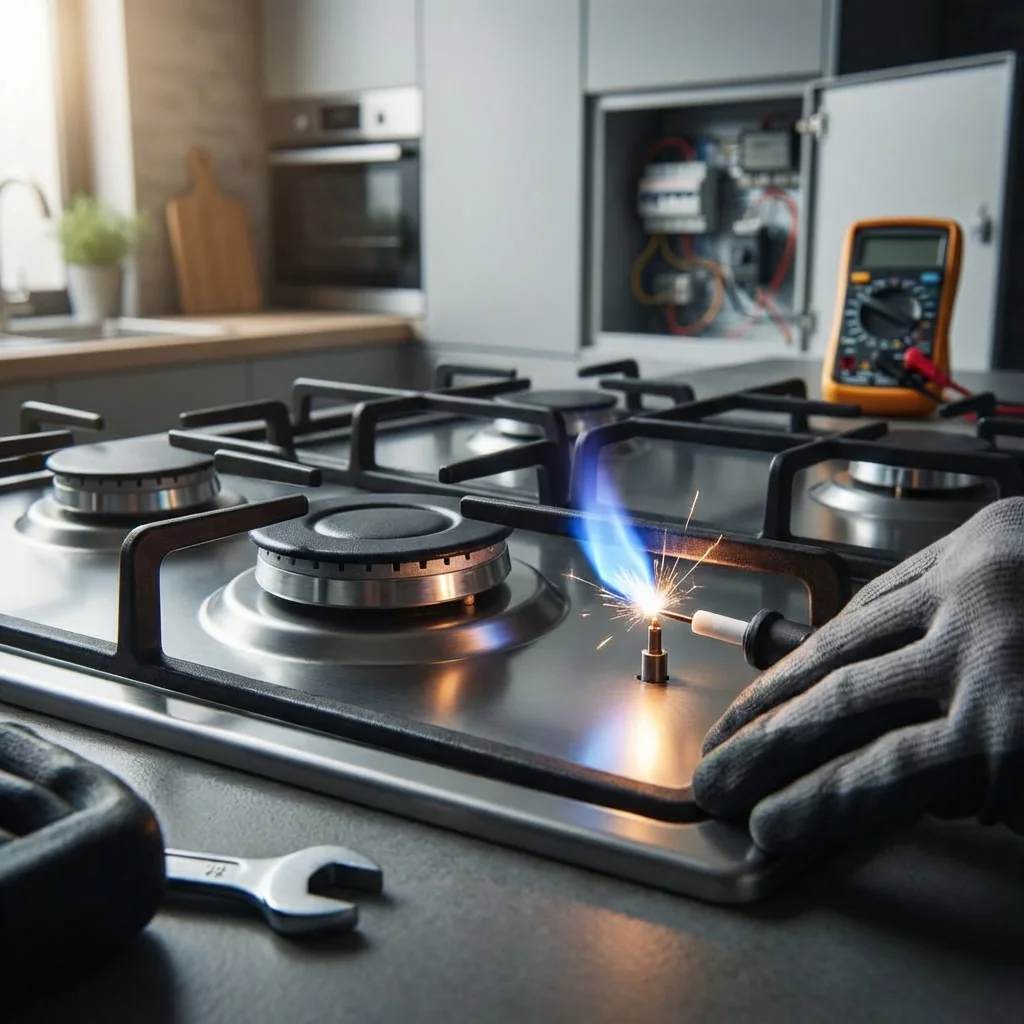
Repeated clicking with no flame usually means a failed igniter, blocked burner ports or a faulty gas valve. Book an ignition repair.
Frequently Asked Questions About Gas Appliance Ignition Problems
Q: Why won't my gas appliance ignite or light? A: Gas appliances fail to ignite due to several common causes across four main systems: Pilot light problems include extinguished pilots, faulty thermocouples preventing pilot from staying lit, clogged pilot orifices blocking gas flow, or improper thermocouple positioning away from flame. Electronic ignition failures involve cracked hot surface igniters unable to heat sufficiently, failed spark electrodes not generating spark, dirty flame sensors preventing flame detection, or control board malfunctions. Gas supply issues mean closed manual shutoff valves, low gas pressure insufficient for ignition, air contamination in gas lines, or clogged gas orifices. Electrical problems include tripped breakers, loose wiring connections, failed control modules, or safety lockouts from previous failures requiring manual reset.
Q: How can I tell if my pilot light is working properly? A: A properly functioning pilot flame displays specific characteristics indicating safe, efficient operation: The flame should be predominantly blue with minimal yellow tips (yellow indicates incomplete combustion from debris or improper air mix), stand approximately 1/2 to 3/4 inch high for most appliances (check manufacturer specifications), remain steady without flickering or dancing (indicating proper draft and gas pressure), fully envelope the thermocouple sensing tip (ensuring adequate electrical generation), and stay lit continuously without extinguishing. Warning signs of pilot problems include frequent pi lot outages, weak or lazy flames, yellow or orange coloration, excessive noise or popping, soot formation around the pilot, or difficulty relighting after extinguishment.
Q: What should I do if my gas appliance won't ignite? A: Follow this safe, systematic troubleshooting sequence: First, check that all manual gas shutoff valves are fully open (turn counterclockwise). Second, verify electrical power to the appliance—check circuit breakers and ensure the unit is plugged in if applicable. Third, confirm the thermostat or control is calling for heat (set temperature higher than current temperature). Fourth, listen and watch for ignition attempts—hot surface igniters glow orange, spark igniters produce visible/audible sparks. Fifth, note any error codes displayed and document them. Sixth, if you smell gas AT ANY TIME, immediately turn off all gas valves, evacuate, avoid electrical switches, and call 911 and your gas utility from outside. Never attempt repairs if you smell gas—this is an emergency requiring professional intervention.
Q: Can I relight a pilot light myself? A: Yes, you can safely relight standard pilot lights by following proper procedures, but only under specific conditions. Follow manufacturer instructions precisely—usually: turn gas control to OFF and wait 5 minutes for gas to dissipate, turn control to PILOT while holding the pilot button, light pilot with long lighter while continuing to hold button for 30-60 seconds, release button—pilot should remain lit. However, immediately stop and call professionals if: you smell gas before beginning, pilot won't ignite after 2-3 attempts, pilot lights but immediately extinguishes, you're uncomfortable with the procedure, the appliance has electronic ignition instead of standing pilot, or safety systems are locked out. Never use matches near gas appliances, never bypass safety devices, and never force stuck controls.
Q: How often should ignition systems be serviced? A: Gas appliance ignition systems require annual professional maintenance as a minimum standard for safety and reliability. However, service frequency should increase based on several factors: Furnaces and water heaters used year-round need annual pre-winter inspections. High-use appliances like restaurant ovens or commercial dryers need semi-annual service. Older appliances (10+ years) benefit from twice-yearly inspections to catch age-related failures early. Pilot light systems require more frequent checks than electronic ignition—inspect pilots quarterly. After any ignition problems, professional inspection ensures underlying causes are addressed. Toronto's extreme temperature variations justify pre-winter and post-winter inspections for heating appliances.
Q: When should I replace vs. repair ignition system components? A: Repair vs. replacement decisions depend on component type and failure mode. Always replace: hot surface igniters when cracked (cannot be repaired), thermocouples when electrical output is low (cleaning rarely helps long-term), electronic control boards when failed (repair not cost-effective), spark electrodes when eroded beyond specification, and gas valves when internal components fail. Consider repair for: mechanical gas valves with external issues, electrical connections and wiring when only connections fail, pilot assemblies when clogged (cleaning often successful), and control adjustment issues versus replacing entire systems. Professional assessment weighs repair costs against replacement, considers appliance age and overall condition, evaluates safety implications, and determines which approach provides best long-term value—generally repairs under $200 make sense for appliances under 10 years old.
Q: What causes a hot surface igniter to fail? A: Hot surface igniters (HSI) fail from multiple causes related to their fragile ceramic-silicon construction and extreme operating temperatures: Physical damage from impacts during service, vibrations from blower motors, or thermal shock from rapid temperature changes causes cracking—as silicon carbide ceramic is brittle and any crack prevents proper heating. Electrical degradation occurs as resistance increases over 3-8 years of use, eventually preventing the igniter from reaching required 2500°F ignition temperature. Contamination from oil, cleaning products, or finger oils creates insulating barriers reducing heat transfer. Manufacturing defects appear as premature failures within first year. Poor installation causes stress fractures if mounting brackets over-tighten or ceramic contacts metal unevenly. Power surges damage electrical elements. Normal wear from 1000-3000 ignition cycles eventually causes failure—consider HSI replacement every 5-7 years as preventive maintenance.
Q: Why does my pilot light keep going out? A: Pilot lights extinguish repeatedly due to thermocouple failures or environmental factors: The thermocouple, which generates electrical current from pilot heat to hold the gas valve open, fails when it's dirty (preventing heat absorption), improperly positioned outside the flame, electrically worn out producing insufficient voltage (test should show 20-30 millivolts), or has loose electrical connections preventing signal transmission. Environmental causes include drafts from open windows, return air vents, exhaust fans, or improperly sealed combustion chambers blowing out pilots. Gas pressure problems—too low prevents adequate pilot flame, too high causes flame lift-off and blowout. Clogged pilot orifices restrict gas creating weak flames easily extinguished. Thermocouple replacement typically costs $100-150 and resolves 80% of pilot stability issues.
Q: What does it mean when my gas appliance makes clicking sounds but won't light? A: Clicking without ignition indicates spark ignition systems attempting operation but failing to establish flame: The spark module generates clicking as it repeatedly attempts ignition (normal), but flame doesn't establish because either gas isn't reaching the burner (closed valves, clogged orifices, insufficient pressure), the spark isn't strong enough or positioned correctly to ignite gas (worn electrodes, wrong gap, poor grounding), or the ignition sequence timing is wrong (control board issues). For gas dryers, clicking coils indicate solenoids energizing but suggest either no gas flow or flame sensor immediately shutting down ignition. Some clicking is normal during startup—concern arises when clicking continues beyond 30-60 seconds without ignition, or when clicking occurs but absolutely no visible spark appears. Continuous clicking with no ignition requires professional diagnosis to prevent component damage from extended retry cycles.
Q: Is it dangerous if my gas appliance won't ignite? A: Ignition failures themselves aren't immediately dangerous IF you follow proper safety protocols, but improper troubleshooting creates serious hazards: Never continue attempting ignition if you smell gas—unburned gas accumulation causes explosion risks. Don't bypass safety controls or lockouts—they prevent dangerous operating conditions like flame rollout or carbon monoxide production. Avoid repeated ignition attempts that flood the combustion chamber with unburned gas. Never use matches or lighters near gas leaks. However, ignition problems often indicate developing safety issues—faulty flame sensors may allow gas flow without ignition, cracked heat exchangers cause ignition problems AND carbon monoxide leaks, and gas valve failures can leak when closed. Always have professionals diagnose persistent ignition failures—they perform combustion analysis, safety checks, and carbon monoxide testing during repairs.
Q: Can cold weather affect gas appliance ignition? A: Yes, Toronto's cold winters significantly impact gas ignition performance through multiple mechanisms: Gas pressure drops in extreme cold as natural gas density increases—utility companies adjust for this but severe cold can still cause low pressure affecting ignition, particularly at peak demand times. Condensation forms on electrical components from temperature differences between cold outdoor air intake and warm appliance interiors, causing electrical failures, corrosion, and control problems. Exhaust venting can ice up, blocking proper combustion air flow and triggering pressure switch lockouts preventing ignition. Cold starts require more ignition time as metal components are contracted and gas is denser. Hot surface igniters fail more frequently in winter from thermal shock cycling from -30°C outdoor temps during servicing to 1370°C operating temperature. Schedule pre-winter inspections in October to address these vulnerabilities before heating season emergencies.
Q: How much does professional gas appliance ignition repair cost in Toronto? A: Gas ignition repair costs vary based on appliance type and specific failure mode: Diagnostic fees run $90 regular brands, $110 high-end brands; +$40 after-hours but are typically waived when repairs proceed. Pilot system repairs including thermocouple replacement cost $100-175, gas valve cleaning $150-200, complete pilot assembly replacement $200-300. Electronic ignition repairs include hot surface igniter replacement at $150-280, spark igniter/module replacement $180-320, flame sensor cleaning $90 regular brands, $110 high-end brands; +$40 after-hours or replacement $120-200, and control board replacement $250-500. After-hours service adds $40. Most common ignition failures—HSI igniters and thermocouples—cost $150-250 total. At JK Appliances Toronto, we provide transparent upfront pricing after diagnosis so you understand costs before approving work, include warranties on all parts and labor, and often complete repairs same-visit for common issues with stocked parts.
Don't stay in the cold! For professional gas appliance ignition repair in Toronto, contact JK Appliances. Our certified technicians diagnose and repair all ignition system problems quickly and safely. Call (647) 560-8966 for reliable ignition repair service - we'll get your appliances lighting properly again!