Oven Not Heating? Complete Troubleshooting Guide for Toronto Kitchens
An oven that won't heat properly can derail your cooking plans and disrupt daily meal preparation. Whether it's not heating at all, heating unevenly, or taking too long to reach temperature, these issues are frustrating but often fixable. Here's your comprehensive guide to diagnosing and resolving oven heating problems.
Quick Answer: Oven won't heat up or heating unevenly? Learn to diagnose and fix common heating problems. Expert oven repair in Toronto from JK Appliances. This is a common issue that can usually be resolved with proper troubleshooting. If the problem persists, professional diagnosis is recommended.
Quick Diagnostic Steps
Before diving deep, try these immediate checks:
- Verify power supply - check that oven is plugged in and circuit breaker hasn't tripped
- Test temperature settings - ensure you've selected the correct temperature and function
- Check door closure - door must be completely closed for heating to begin
- Listen for sounds - heating elements should make slight humming or clicking sounds
- Look for visible heat - electric elements should glow red, gas should show blue flames
Common Causes of Heating Problems
ELECTRIC OVENS
1. FAULTY HEATING ELEMENTS
Most common issue - elements burn out over time
- Bake element: Bottom element for general cooking
- Broil element: Top element for broiling
- Symptoms: No glow, visible damage, uneven heating
- Test: Visual inspection for breaks or blistering
2. TEMPERATURE SENSOR MALFUNCTION
Controls oven temperature accuracy
- Location: Usually inside oven cavity
- Symptoms: Incorrect temperatures, constant heating
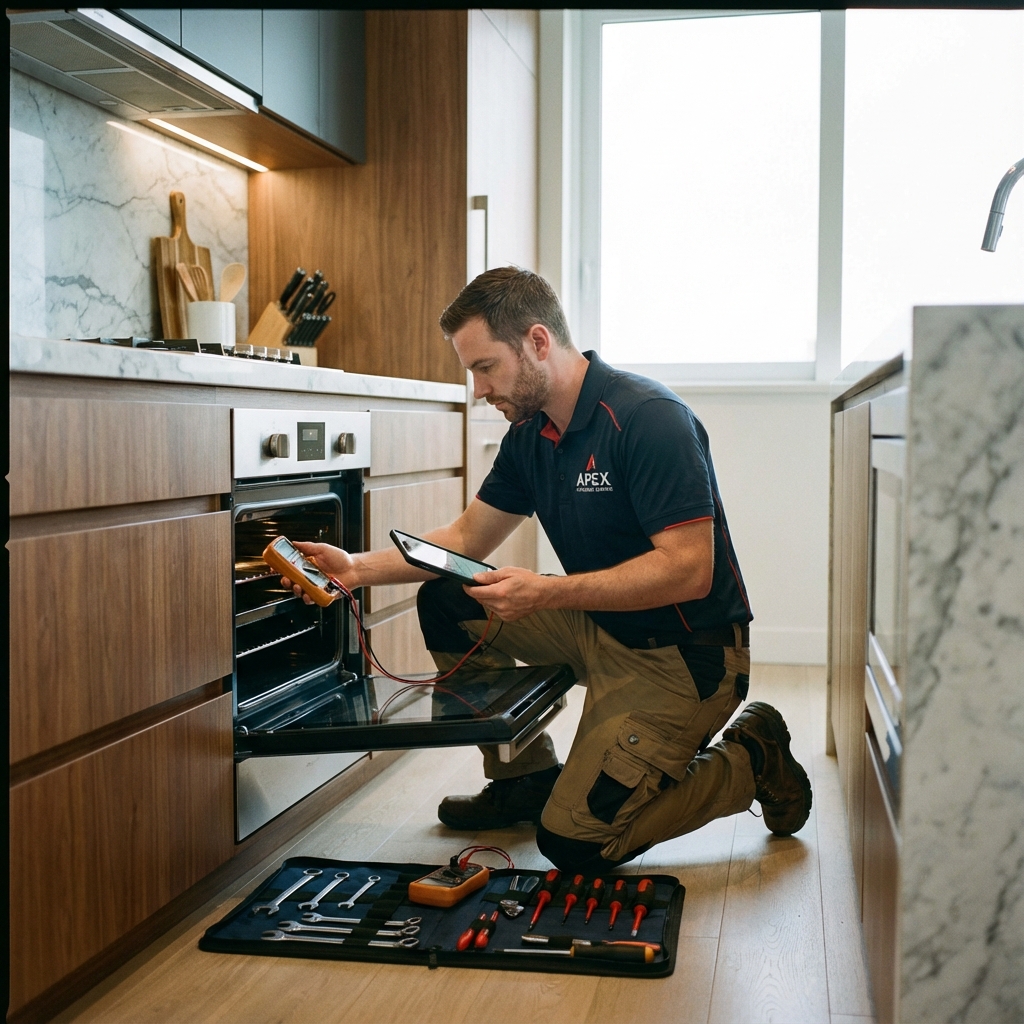
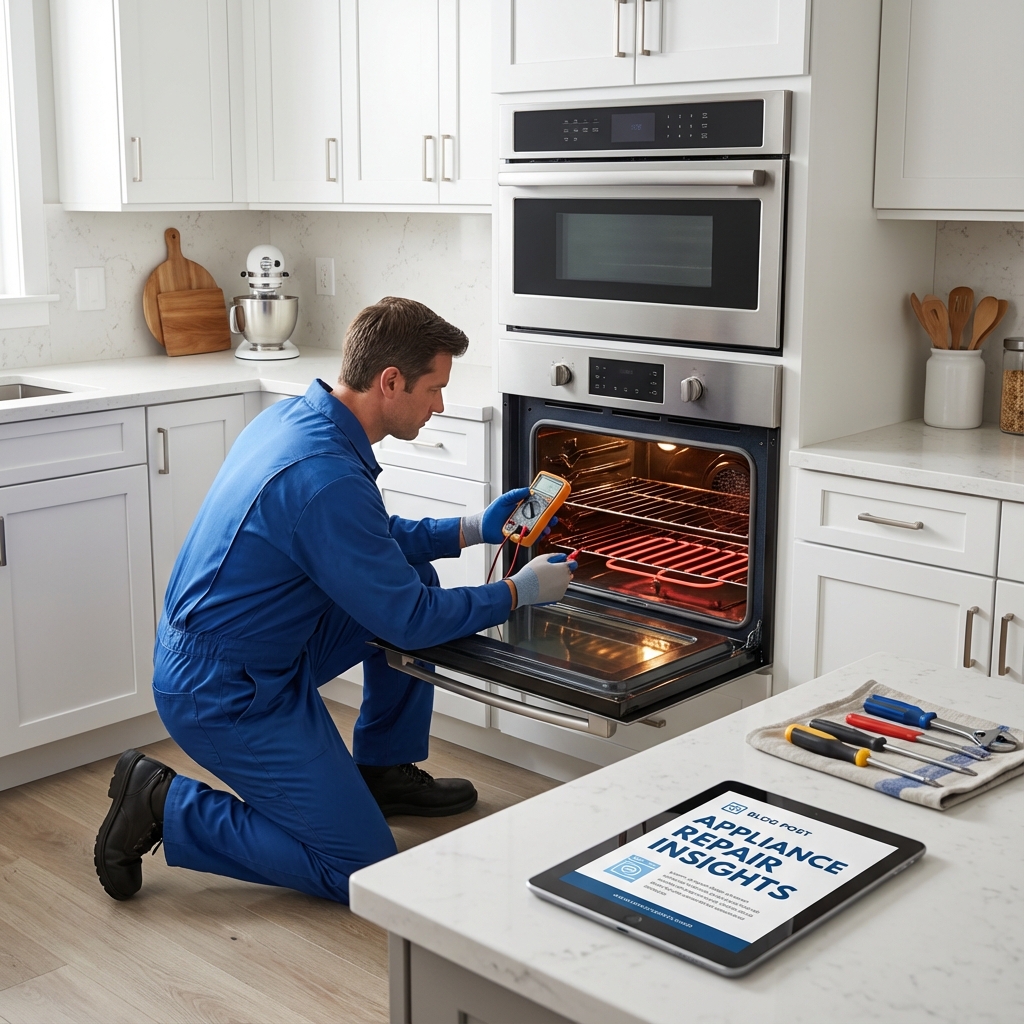
- Test: Resistance testing with multimeter
3. CONTROL BOARD FAILURE
Electronic brain of modern ovens
- Symptoms: No response to controls, error codes
- Causes: Power surges, age, moisture damage
- Fix: Professional replacement usually required
4. DOOR SEAL PROBLEMS
Heat escapes through damaged seals
- Symptoms: Longer cooking times, uneven heating
- Test: Visual inspection for tears or gaps
- Fix: Seal replacement
GAS OVENS
1. IGNITER PROBLEMS
Most common gas oven issue
- Symptoms: Oven won't light, takes long to heat
- Test: Should glow bright white/orange
- Weak igniter: Glows but doesn't light gas
2. GAS VALVE ISSUES
Controls gas flow to burner
- Symptoms: No gas flow, inconsistent heating
- Safety note: Always call professionals for gas valve work
3. THERMOSTAT MALFUNCTION
Temperature control problems
- Symptoms: Wrong temperatures, no cycling
- Test: Compare set vs. actual temperature
4. BLOCKED BURNER PORTS
Food debris blocks gas flow
- Symptoms: Uneven flames, poor heating
- Fix: Careful cleaning of burner holes
Step-by-Step Troubleshooting
FOR ELECTRIC OVENS
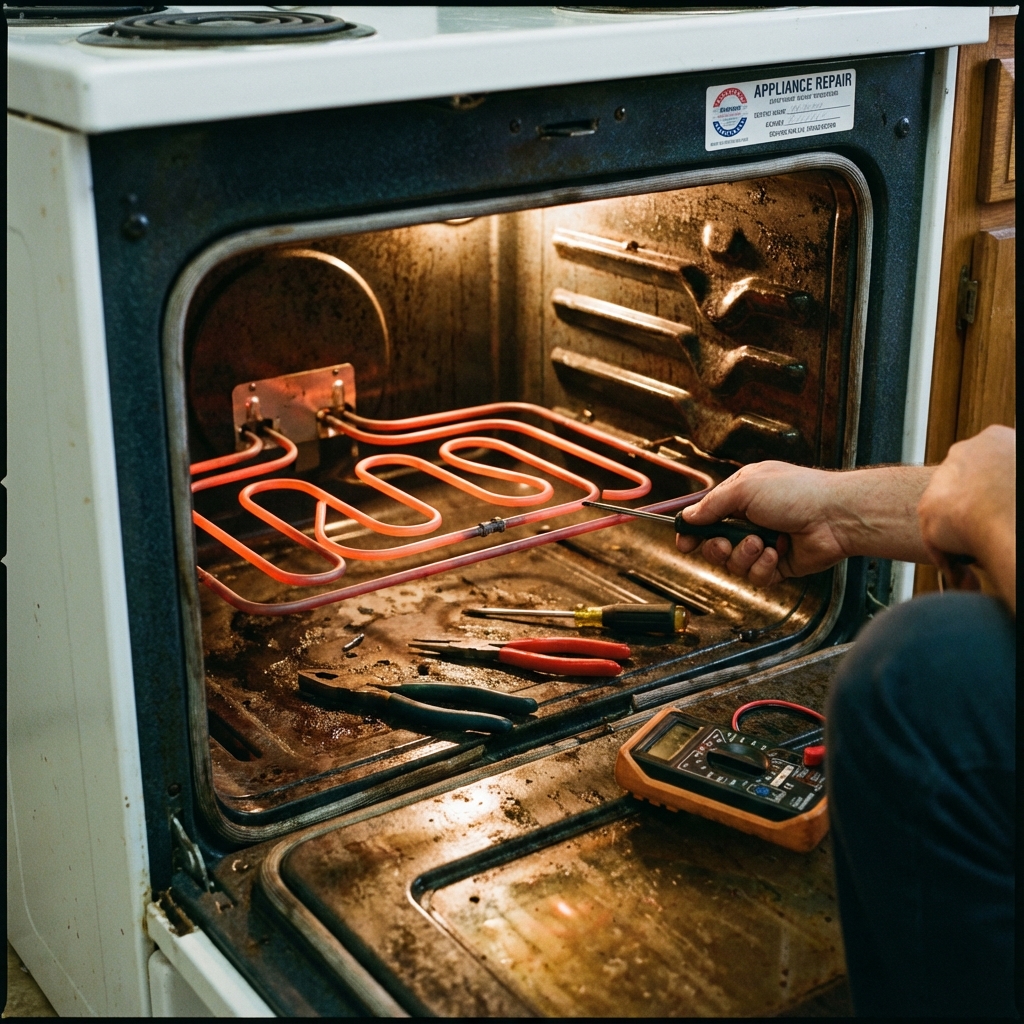
STEP 1: Visual Element Inspection
- Remove oven racks for clear view
- Look at bake element (bottom) for:
- Cracks or breaks in element
- Blistering or bubbling
- Dark spots or discoloration
- Check broil element (top) similarly
- Test by turning on - elements should glow evenly
STEP 2: Temperature Sensor Check
- Locate sensor probe inside oven
- Check for damage or loose connections
- Test resistance (should read ~1100 ohms at room temperature)
- Verify sensor isn't touching oven walls
STEP 3: Control Panel Testing
- Try different temperature settings
- Test various cooking modes (bake, broil, convection)
- Check for error codes in display
- Note any unresponsive buttons
FOR GAS OVENS
STEP 1: Igniter Inspection
- Remove bottom oven rack
- Locate igniter near gas burner
- Turn oven on and observe:
- Should glow bright white/orange
- Should ignite gas within 90 seconds
- Weak glow indicates replacement needed
STEP 2: Gas Flow Check
- Listen for gas flow when oven turns on
- Check that gas supply valve is open
- Verify other gas appliances work normally
- Look for proper flame pattern (blue flames)
STEP 3: Burner Inspection
- Remove oven bottom panel if accessible
- Check burner ports for blockages
- Look for rust or corrosion
- Ensure burner is properly positioned
DIY Fixes You Can Safely Attempt
Replace Electric Heating Elements
Tools needed: Screwdriver, new element
- Turn off power at circuit breaker
- Remove oven racks
- Unscrew element from back wall
- Disconnect wire terminals (note positions)
- Install new element in reverse order
- Test operation
Clean Gas Burner Ports
Tools needed: Thin wire, soft brush
- Turn off gas supply
- Remove oven bottom and burner cover
- Gently clear blocked ports with thin wire
- Brush away debris
- Reassemble and test
Adjust Oven Door
For heat loss issues:
- Check door hinges for proper alignment
- Adjust door catch if door doesn't close tightly
- Replace door seal if damaged
- Ensure door closes completely before heating starts
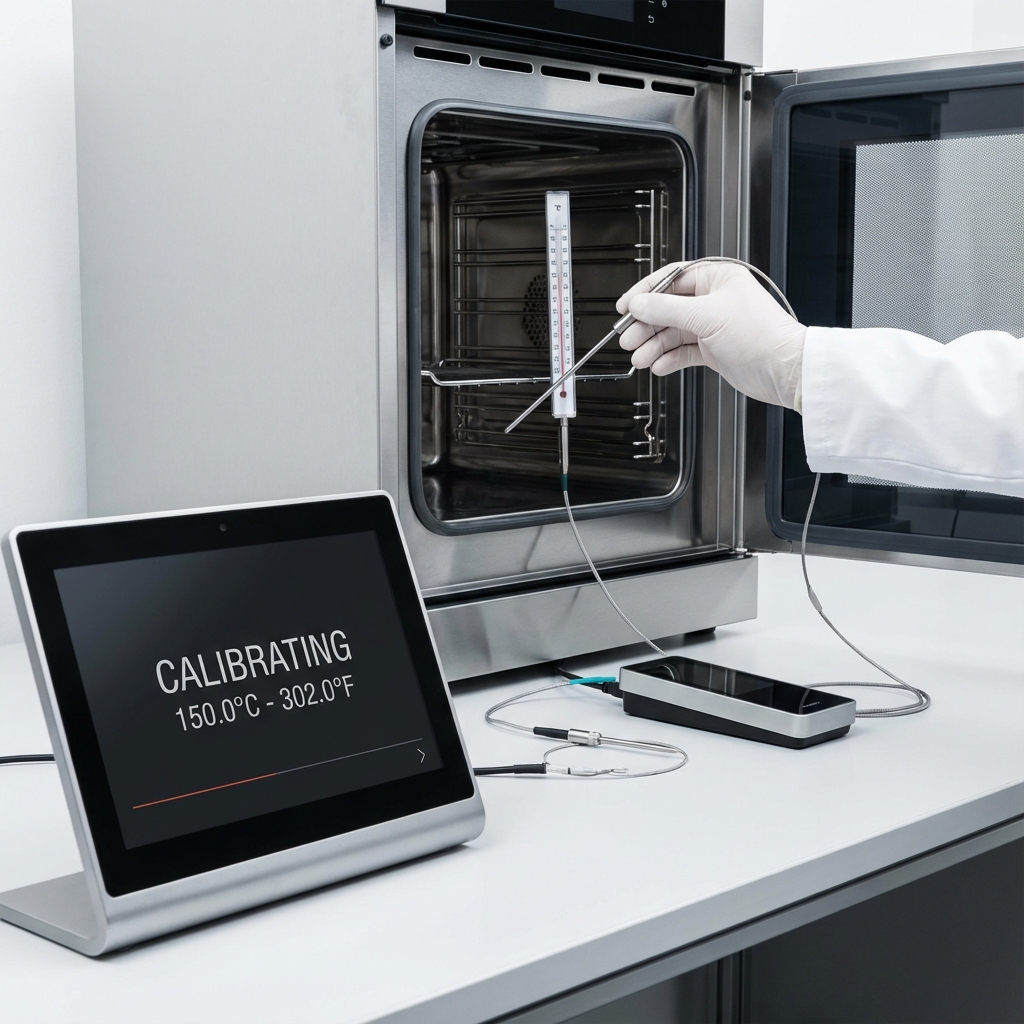
Calibrate Oven Temperature
If temperatures are consistently off:
- Use oven thermometer to verify actual temperature
- Access calibration mode (varies by model)
- Adjust temperature offset according to manual
- Test with thermometer after adjustment
When to Call JK Appliances
Contact professionals immediately for:
- Gas-related issues - never attempt gas valve or line repairs
- Electrical problems - sparking, burning smells, or shock hazards
- Control board failures - complex electronic repairs
- Multiple component failures - may indicate larger system problems
- Safety concerns - any situation that seems unsafe
Our certified technicians handle all oven brands and can diagnose complex issues safely.
Safety Warnings
Electric Ovens
- Always turn off power at breaker before repairs
- Never touch heating elements when hot
- Use insulated tools when working with electrical components
- Don't bypass safety features
Gas Ovens
- Never attempt gas line or valve repairs yourself
- If you smell gas, turn off supply and call professionals immediately
- Don't use oven if igniter glows but doesn't light gas
- Ensure proper ventilation during repairs
Prevention Tips
Regular Maintenance
- Clean oven interior monthly
- Check door seals quarterly
- Test temperature accuracy annually
- Schedule professional maintenance yearly
Proper Usage
- Don't use oven to heat your home
- Avoid slamming oven door
- Clean spills promptly to prevent damage
- Use appropriate cookware for oven type
Environmental Factors
- Ensure adequate ventilation around oven
- Keep oven level for proper operation
- Protect from power surges with surge protector
Toronto-Specific Considerations
Older Homes: Many Toronto homes have older electrical systems. If your oven frequently trips breakers:
- Have electrical system inspected
- Consider upgrading electrical panel
- Ensure proper grounding
Condo Living: Limited ventilation in Toronto condos affects oven performance:
- Use exhaust fans during cooking
- Ensure adequate clearance around built-in ovens
- Consider impact on other kitchen appliances
Winter Heating: Don't use your oven to supplement home heating - it's inefficient and potentially dangerous.
Cost of Common Oven Repairs
- Heating element replacement: $150-250
- Igniter replacement (gas): $200-300
- Temperature sensor: $180-280
- Door seal replacement: $120-200
- Control board replacement: $400-600
- Thermostat replacement: $250-400
Oven Temperature Testing
To verify your oven's accuracy:
- Place oven thermometer in center of oven
- Preheat to 350°F
- Wait 20 minutes after preheat signal
- Compare thermometer reading to set temperature
- Acceptable range: ±25°F
- If outside range, calibration or repair needed
FAQ
Q: Why does my oven take so long to preheat? A: Common causes include faulty heating elements, poor door seals, or incorrect calibration. Electric ovens typically take 10-15 minutes, gas ovens 5-10 minutes.
Q: Can I still use my oven if only one heating element works? A: You can, but cooking will be uneven and take longer. Replace the faulty element soon to prevent overworking the remaining one.
Q: Why does my gas oven igniter glow but not light the gas? A: The igniter is likely weak and needs replacement. It should glow bright white/orange and ignite gas within 90 seconds.
Q: Is it normal for my oven temperature to fluctuate? A: Yes, ovens cycle on and off to maintain temperature. Normal fluctuation is ±25°F around the set temperature.
Q: Should I repair or replace my old oven? A: If repair costs exceed 50% of replacement cost, or if the oven is over 15 years old with multiple issues, replacement is usually better.
Don't let a faulty oven disrupt your cooking plans. JK Appliances provides expert oven diagnosis and repair throughout Toronto. Same-day service available for most heating issues—call (647) 560-8966 or book online.
Common Questions People Ask
Q: Is it normal for my oven not heating to heating? complete troubleshooting guide for toronto kitchens? No, this is not normal behavior and indicates an underlying issue that should be addressed promptly to prevent further damage.
Q: Can I fix this oven not heating problem myself? Some basic issues can be resolved with DIY troubleshooting, but complex problems require professional diagnosis to avoid safety risks and warranty issues.
Q: How much does professional oven not heating repair cost in Toronto? Repair costs typically range from $150-$400 depending on the specific issue and parts needed. Our technicians provide free estimates before any work begins.
Q: How long does oven not heating repair take? Most repairs are completed within 1-2 hours during a single visit. Some cases may require ordering specialty parts with a follow-up appointment.
Q: Should I repair or replace my oven not heating? If your oven not heating is less than 8 years old and repair costs are under 50% of replacement cost, repair is usually the better value. Our technicians can help you make the right decision.
Q: Do you offer same-day oven not heating repair in Toronto? Yes! We offer same-day and emergency repair services throughout Toronto and the Greater Toronto Area for urgent issues.
Q: What brands of oven not heating do you repair? We service all major brands including Bosch, Samsung, LG, Whirlpool, KitchenAid, GE, Maytag, Frigidaire, Miele, and more.
Q: Is oven not heating repair covered by warranty? Many oven not heating issues are covered under manufacturer warranty. We can help verify your warranty status and handle claim processing.
Expert Tips & Pro Insights
💡 Pro Tip: Regular maintenance can prevent 80% of appliance problems. Follow manufacturer guidelines for cleaning and care.
⚠️ Safety Warning: Always disconnect power before attempting any repairs or inspections. If you smell gas, evacuate immediately and call emergency services.
🔧 Technician Insight: Many issues that seem complex often have simple solutions. Start with basic troubleshooting before assuming the worst.
📞 When to Call a Professional: If you encounter electrical components, gas lines, refrigerant systems, or if basic troubleshooting doesn't resolve the issue, it's time to call an expert.