Stove Ignition Problems? Gas Stove Igniter Repair Toronto
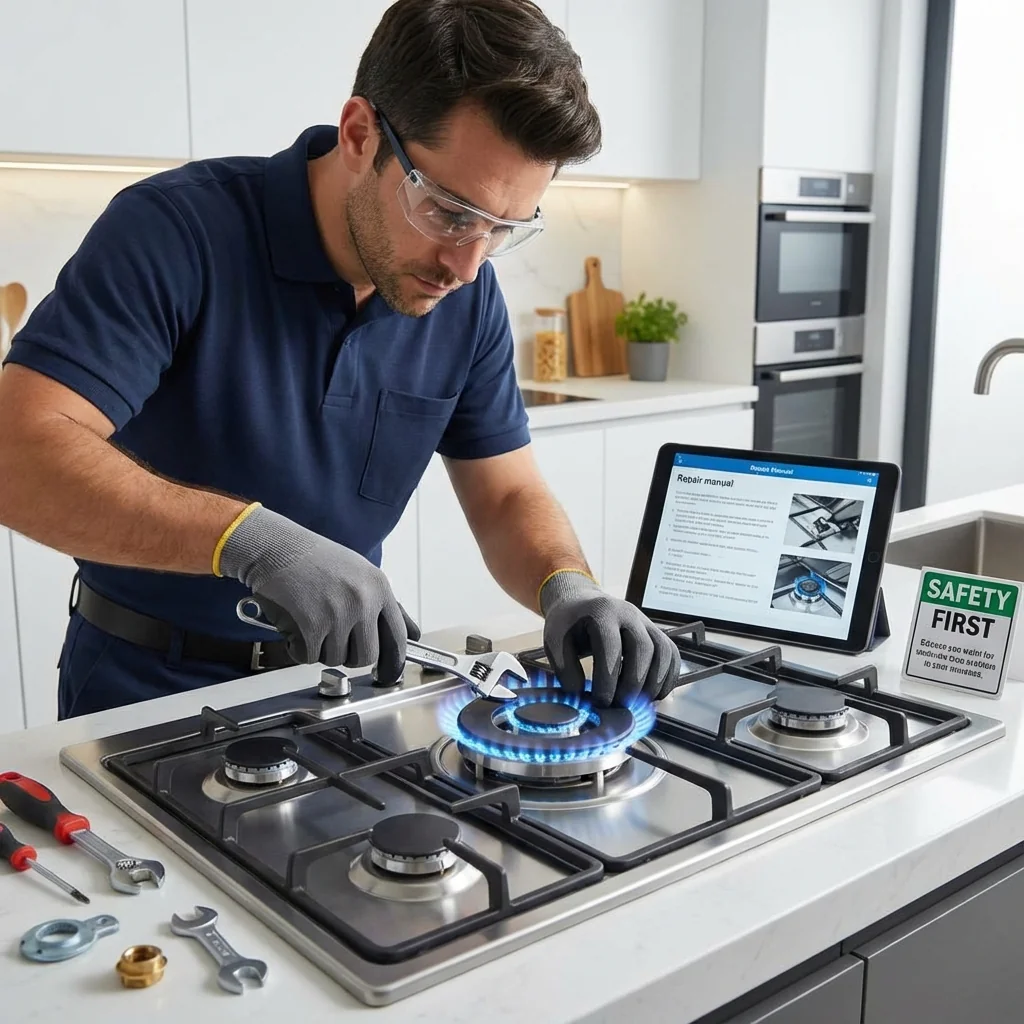
Gas stove ignition problems can turn cooking into a frustrating experience. Whether your stove won't light at all, keeps clicking continuously, or has delayed ignition, these issues often stem from problems with the ignition system. This comprehensive guide covers everything you need to know about diagnosing and fixing gas stove ignition problems.
Quick Answer: Gas stove won't ignite, clicking continuously, or delayed ignition? Expert gas stove ignition repair in Toronto. Fast diagnosis and professional igniter repairs from JK Appliances.
Understanding Gas Stove Ignition Systems
ELECTRONIC IGNITION SYSTEMS
Components: Ignition module, spark electrodes, control switches, wiring Operation: Electronic spark creates flame when gas valve opens Advantages: Reliable, no pilot light needed, energy efficient Common in: Most modern gas stoves and cooktops
PILOT LIGHT SYSTEMS
Components: Pilot burner, thermocouple, gas valve, pilot adjustment Operation: Continuous small flame lights main burners Characteristics: Always burning, older technology Found in: Older gas stoves, some commercial units
PIEZO IGNITION SYSTEMS
Components: Piezo crystal, striker mechanism, electrode Operation: Manual pressure creates spark for ignition Benefits: No electrical connection needed, simple mechanism Applications: Some gas cooktops, outdoor grills
Common Ignition Problems
STOVE WON'T IGNITE AT ALL
Symptoms: No spark, no clicking sound, burner won't light Primary causes:
- Power supply issues
- Faulty ignition module
- Broken ignition switch
- Damaged wiring connections
- Failed spark electrode
Diagnostic steps:
- Check power supply to stove
- Test other burners for ignition
- Listen for clicking sounds
- Inspect visible wiring and connections
- Examine spark electrodes for damage
CONTINUOUS CLICKING
Symptoms: Igniter keeps clicking after burner lights or when turned off Common causes:
- Moisture in ignition system
- Dirty or wet spark electrode
- Faulty ignition module
- Stuck ignition switch
- Grease buildup on components
Troubleshooting approach:
- Turn off all burner controls
- Clean and dry spark electrodes thoroughly
- Check for moisture around ignition components
- Remove grease and food debris
- Test ignition after cleaning
DELAYED IGNITION
Symptoms: Long delay between turning on gas and ignition Safety concern: Can cause gas buildup and dangerous flare-up Causes:
- Weak spark from electrode
- Clogged burner ports
- Low gas pressure
- Dirty ignition components
- Worn ignition module
Immediate actions:
- Turn off burner immediately if delay is excessive
- Clean burner ports and ignition area
- Check gas supply pressure
- Test spark strength and consistency
- Call professional if problem persists
WEAK OR INTERMITTENT SPARK
Symptoms: Faint spark, inconsistent ignition, multiple attempts needed Typical causes:
- Corroded spark electrode
- Loose electrical connections
- Failing ignition module
- Voltage supply problems
- Worn electrode gap
Solutions:
- Clean electrodes with fine sandpaper
- Check electrode gap and alignment
- Tighten electrical connections
- Test voltage supply to ignition system
- Replace worn components as needed
Ignition System Components
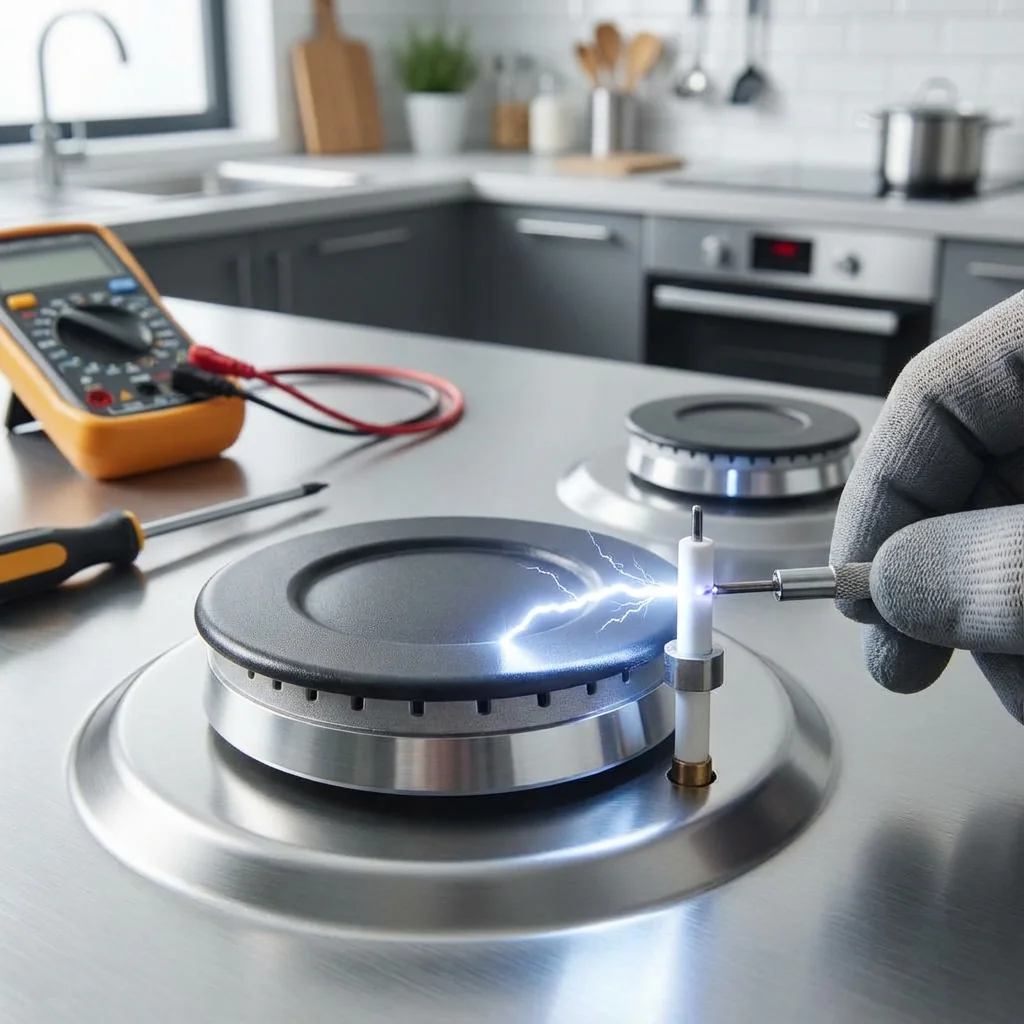
SPARK ELECTRODES
Function: Create electrical spark to ignite gas Location: Near each burner, positioned for optimal spark Common problems: Corrosion, grease buildup, misalignment Maintenance: Regular cleaning, proper gap adjustment
Signs of electrode problems:
- No visible spark
- Weak or yellow spark
- Spark in wrong location
- Corroded or damaged electrode tip
IGNITION MODULE
Purpose: Controls timing and power for spark generation Location: Usually behind control panel or in base of stove Symptoms of failure: No spark on any burner, weak spark, timing issues Testing: Requires electrical testing equipment
Module failure indicators:
- Complete ignition failure
- Inconsistent spark timing
- Weak spark on all burners
- Continuous clicking on multiple burners
IGNITION SWITCHES
Function: Signal ignition module when burner is turned on Types: Mechanical switches, electronic sensors Problems: Sticking, electrical failure, poor contact Testing: Switch continuity and proper operation
WIRING AND CONNECTIONS
Importance: Carries electrical signals and power Common issues: Loose connections, damaged wires, corrosion Inspection: Visual check for damage, electrical testing Repair: Proper connection techniques, wire replacement
Diagnostic Procedures
SYSTEMATIC TROUBLESHOOTING
Initial Assessment
- Test all burners to identify scope of problem
- Listen for clicking sounds during ignition attempts
- Observe spark quality and location
- Check power supply to stove
- Note any error codes or indicators
Visual Inspection
- Remove burner caps and heads for access
- Inspect spark electrodes for damage or buildup
- Check wiring connections for looseness or corrosion
- Look for moisture or grease accumulation
- Verify proper component alignment
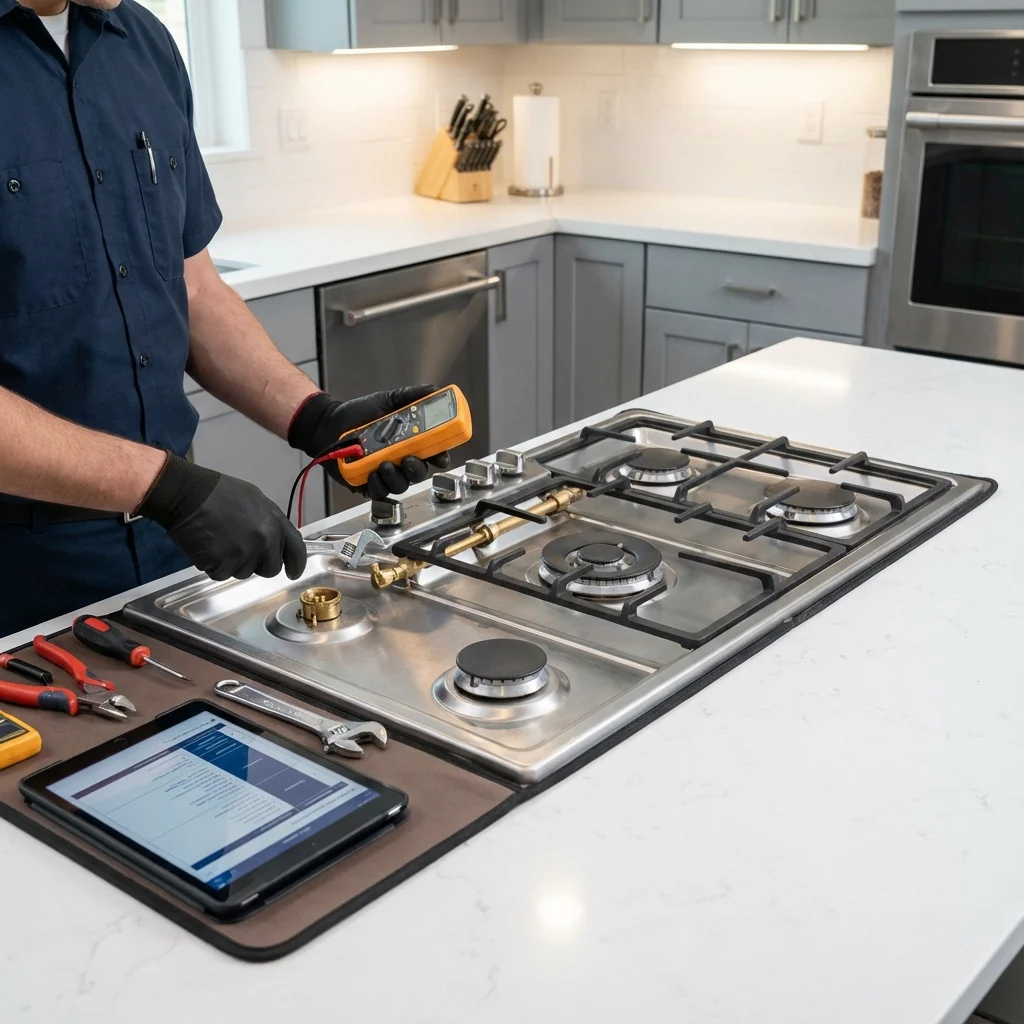
Electrical Testing
- Test voltage supply to ignition system
- Check continuity through ignition switches
- Measure resistance of spark electrodes
- Test ignition module output (if accessible)
- Verify ground connections
SAFETY TESTING
- Gas leak detection around connections
- Proper ventilation during testing
- Electrical safety procedures
- Fire safety precautions
- Emergency shutoff accessibility
DIY Repair Solutions
CLEANING AND MAINTENANCE
Electrode Cleaning
- Turn off power and gas supply
- Remove burner components for access
- Clean electrodes with fine steel wool or sandpaper
- Remove grease and carbon buildup
- Check gap and alignment (typically 1/8 inch)
Moisture Removal
- Dry all ignition components thoroughly
- Use compressed air to blow out moisture
- Allow complete drying time
- Check for water entry points
- Seal gaps that allow moisture intrusion
Connection Tightening
- Inspect all electrical connections
- Tighten loose wire nuts and terminals
- Clean corroded connections with contact cleaner
- Apply dielectric grease to prevent corrosion
- Secure wiring to prevent movement
COMPONENT REPLACEMENT
Spark Electrode Replacement
- Disconnect power and gas supply
- Remove old electrode carefully
- Install new electrode with proper gap
- Secure mounting and electrical connections
- Test ignition before reassembly
Ignition Switch Replacement
- Remove control knob and panel access
- Disconnect wiring from old switch
- Install new switch with proper orientation
- Reconnect wiring securely
- Test switch operation and ignition
Professional Repair Situations
WHEN TO CALL PROFESSIONALS
Complex Electrical Issues
- Ignition module failure requiring replacement
- Multiple component failures
- Wiring harness damage or replacement
- Control board integration problems
Safety Concerns
- Gas leaks during ignition problems
- Electrical shorts or sparking
- Improper gas pressure or flow
- Carbon monoxide concerns
Warranty Considerations
- New appliances under warranty
- Extended warranty coverage
- Manufacturer recalls or service bulletins
- Professional certification requirements
PROFESSIONAL ADVANTAGES
- Specialized diagnostic equipment
- Access to genuine replacement parts
- Safety expertise for gas and electrical work
- Warranty coverage on repairs
- Code compliance assurance
Brand-Specific Issues
WHIRLPOOL/KITCHENAID STOVES
Common problems: Ignition module failures, electrode corrosion Typical solutions: Module replacement, electrode cleaning/replacement Service notes: Some models have known ignition timing issues
GE STOVES
Frequent issues: Switch failures, wiring problems Repair approach: Systematic electrical diagnosis Parts availability: Good availability through authorized dealers
FRIGIDAIRE STOVES
Known problems: Moisture sensitivity, electrode wear Solutions: Improved sealing, regular maintenance Service considerations: Some models require specific procedures
SAMSUNG STOVES
Technology features: Advanced ignition control, multiple safety features Common repairs: Electronic control issues, sensor problems Requirements: Specialized diagnostic tools and procedures
LG STOVES
Innovation focus: Precise ignition timing, energy efficiency Typical problems: Control integration, sensor calibration Repair notes: Electronic component complexity
Safety Considerations
GAS SAFETY
- Never ignore gas odors during ignition problems
- Ensure proper ventilation in kitchen
- Don't attempt ignition with matches or lighters
- Turn off gas supply if major problems detected
- Install gas leak detectors for early warning
ELECTRICAL SAFETY
- Turn off power before electrical work
- Use proper electrical testing procedures
- Don't work on live circuits
- Check for proper grounding
- Use appropriate safety equipment
FIRE PREVENTION
- Keep flammable materials away from stove
- Don't leave ignition problems unattended
- Have fire extinguisher readily available
- Know location of gas shutoff valve
- Maintain smoke detectors in kitchen
Preventive Maintenance
DAILY CARE
- Clean spills immediately to prevent buildup
- Wipe down burner areas after use
- Check for proper burner cap placement
- Ensure adequate ventilation during cooking
WEEKLY MAINTENANCE
- Clean spark electrodes with dry brush
- Remove grease buildup from ignition areas
- Check burner ports for clogs
- Test ignition on all burners
MONTHLY INSPECTION
- Deep clean all burner components
- Inspect wiring connections for looseness
- Check for moisture intrusion
- Test ignition timing and consistency
ANNUAL SERVICE
- Professional inspection of ignition system
- Gas pressure testing and adjustment
- Electrical system safety check
- Component replacement as needed
Troubleshooting Quick Reference
NO IGNITION ON ANY BURNER
- Check power supply to stove
- Test ignition module function
- Inspect main electrical connections
- Verify gas supply to stove
- Call professional for complex electrical issues
CONTINUOUS CLICKING
- Turn off all burner controls
- Clean and dry all spark electrodes
- Remove moisture from ignition components
- Check for stuck ignition switches
- Test after thorough drying
DELAYED IGNITION
- Clean burner ports thoroughly
- Check spark electrode condition
- Test gas pressure and flow
- Inspect ignition timing
- Call service if safety concern exists
WEAK SPARK
- Clean electrode with fine sandpaper
- Check electrode gap and alignment
- Tighten electrical connections
- Test voltage supply
- Replace electrode if damaged
Cost Analysis
DIY REPAIR COSTS
- Cleaning supplies: $10-15
- Replacement electrodes: $15-30 each
- Basic tools: $25-50
- Ignition switches: $20-40
PROFESSIONAL REPAIR COSTS
- Service call: $95-150
- Electrode replacement: $125-200
- Ignition module: $200-350
- Switch replacement: $150-250
PREVENTION COSTS
- Regular maintenance: $100-150 annually
- Cleaning supplies: $20-30 per year
- Preventive parts: $50-100 as needed
FAQ
Q: Why does my gas stove keep clicking even when turned off? A: Usually caused by moisture in the ignition system or a faulty ignition module. Try drying the electrodes thoroughly first.
Q: Is it safe to use a lighter to ignite my gas burner? A: While possible in emergencies, it's not recommended as a regular practice. Fix the ignition system for safe, reliable operation.
Q: How often should I clean my stove's ignition system? A: Clean spark electrodes weekly and perform thorough cleaning monthly, or more often with heavy use.
Q: What causes delayed ignition on gas burners? A: Usually clogged burner ports, weak spark, or low gas pressure. This can be dangerous and should be addressed promptly.
Q: Can I replace a spark electrode myself? A: Yes, most electrodes are designed for easy replacement. Ensure power and gas are off, and follow manufacturer instructions.
Don't struggle with ignition problems! JK Appliances provides expert gas stove ignition repair throughout Toronto. Our technicians quickly diagnose and fix all types of ignition issues for safe, reliable operation. Call (647) 560-8966 or book online for same-day ignition repair service!