Bad Smell from Dishwasher? Complete Guide to Eliminating Odors
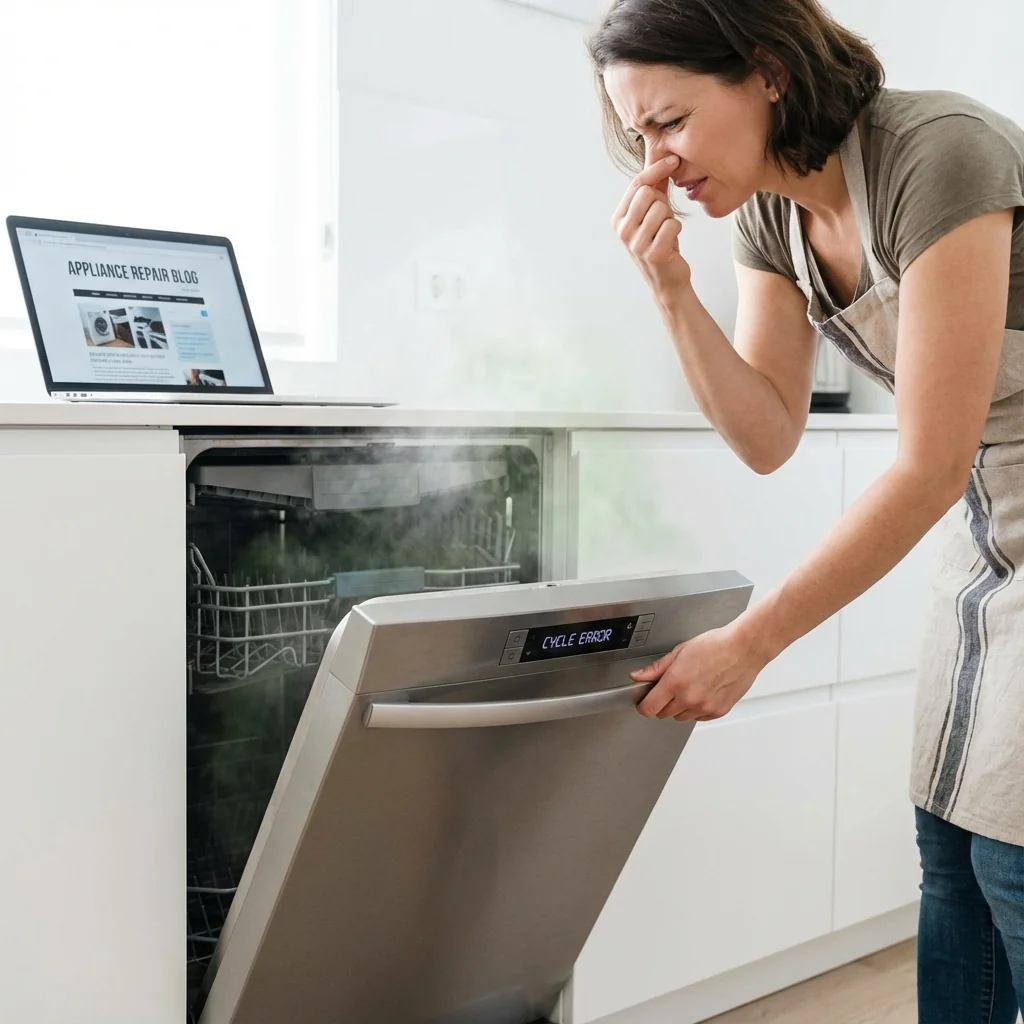
A bad smell from your dishwasher is not just unpleasant—it can transfer to your "clean" dishes and indicate underlying problems that may worsen over time. Whether you're dealing with a musty, rotten food, sulfur, or sewage-like odor, this comprehensive guide will help you identify the cause and eliminate the smell for good.
At JK Appliances Toronto, we've helped thousands of homeowners across the Greater Toronto Area solve their dishwasher odor problems. Here's everything you need to know about why your dishwasher smells and how to fix it.
Quick Answer: Is your dishwasher producing foul odors? Learn the causes of dishwasher smells and proven solutions to eliminate musty, rotten, and sewage odors from your appliance.
Identifying the Type of Smell
Different odors indicate different problems. Let's identify what you're dealing with:
Musty or Mildew Smell
Cause: Trapped moisture and mold growth Location: Usually in the door seal, filter area, or spray arm interiors Severity: Common, easily treatable
Rotten Food or Decay Smell
Cause: Food debris decomposing in the filter, drain, or spray arms Location: Filter, drain sump, food chopper area Severity: Common, requires thorough cleaning
Sulfur or Rotten Egg Smell
Cause: Hydrogen sulfide from bacterial growth Location: Drain hose, garbage disposal connection, standing water Severity: Moderate, may require drain system attention
Sewage or Septic Smell
Cause: Drain line issues, improper installation, or plumbing problems Location: Drain hose, air gap, or plumbing connections Severity: Serious, may require professional attention
Plastic or Burning Smell
Cause: Plastic container melted on heating element, electrical issue Location: Heating element area, electrical components Severity: Urgent, inspect immediately for safety
Solution 1: Deep Clean the Filter System (Most Common Fix)
Why It Matters: The filter is the #1 source of dishwasher odors. It traps food particles that decompose if not cleaned regularly.
Step-by-Step Filter Cleaning:
-
Remove the bottom dish rack for full access
-
Locate and remove the filter
- Most modern dishwashers have a cylindrical filter in the center
- Turn counterclockwise to unlock and lift out
- Remove both the fine filter and coarse filter screen
-
Rinse under hot water
- Use a soft brush or old toothbrush
- Scrub all surfaces to remove grease and debris
- Pay attention to mesh areas
-
Soak in cleaning solution
- Mix 1 cup white vinegar + 1 cup warm water
- Soak filters for 20-30 minutes
- For stubborn odors, add 2 tablespoons baking soda
-
Clean the filter housing
- With filters removed, use a damp cloth to wipe the sump area
- Check for food debris in the drain opening
- Remove any visible objects
-
Reinstall filters securely
- Ensure filters click into place
- Never run dishwasher without filters
Recommended Cleaning Frequency:
- Heavy use: Weekly filter cleaning
- Average use: Every 2 weeks
- Light use: Monthly
Solution 2: Clean the Door Seal and Gasket
The Problem: The rubber door seal traps moisture, food particles, and soap residue—creating a perfect environment for mold and mildew.
Door Seal Cleaning Process:
-
Inspect the gasket thoroughly
- Pull back the rubber folds gently
- Look for visible mold, mildew, or debris
- Check both the inner and outer seal surfaces
-
Clean with vinegar solution
- Mix equal parts white vinegar and warm water
- Dip a clean cloth or sponge into the solution
- Wipe all surfaces of the door seal
- Get into the folds and crevices
-
Address stubborn mold
- For black mold spots, use a paste of baking soda and water
- Apply paste, let sit 15 minutes, then scrub
- For severe cases, use a diluted bleach solution (1:10 ratio)
-
Clean the door edges and hinges
- Wipe down the door edges
- Clean around hinges where grime accumulates
- Don't forget the bottom of the door (often missed!)
-
Dry thoroughly
- Wipe with a dry cloth
- Leave door slightly ajar to air dry
Prevention Tips:
- Leave door cracked open after each cycle
- Wipe down gasket monthly
- Check for damaged seals that need replacement
Solution 3: Run a Cleaning Cycle
Why It Works: A proper cleaning cycle removes grease, bacteria, and mineral deposits from interior surfaces.
Method 1: Vinegar Cleaning Cycle
- Remove all dishes from the dishwasher
- Place 2 cups of white vinegar in a dishwasher-safe container on the bottom rack
- Run a hot water cycle (no detergent)
- The vinegar will deodorize and dissolve grease
Method 2: Baking Soda Follow-Up
- After the vinegar cycle completes
- Sprinkle 1 cup of baking soda on the bottom
- Run a short hot water cycle
- The baking soda neutralizes remaining odors
Method 3: Commercial Dishwasher Cleaner
Recommended Products:
- Affresh Dishwasher Cleaner - Removes limescale and odors
- Finish Dishwasher Cleaner - Deep cleans grease and grime
- Glisten Dishwasher Magic - Removes rust, limescale, and buildup
- Lemi Shine - Excellent for hard water areas
Usage Instructions:
- Follow package directions
- Run on empty dishwasher
- Use hottest water setting available
- Run monthly for best results
Solution 4: Inspect and Clean the Spray Arms
The Problem: Spray arm holes can become clogged with calcium deposits and food debris, which decompose and create odors.
Spray Arm Cleaning:
-
Remove spray arms
- Bottom arm: Usually twists or pulls off center mount
- Middle arm (if present): Snaps onto rack or mount
- Top arm: May have screw or clips
-
Clear spray holes
- Hold under running water
- Use a toothpick or thin wire to clear each hole
- Check for mineral buildup inside
-
Soak in vinegar
- Submerge arms in white vinegar for 2 hours
- This dissolves calcium deposits
- Rinse thoroughly after soaking
-
Check arm interiors
- Look inside the arm openings
- Remove any debris or buildup
- Ensure water can flow freely
-
Reinstall securely
- Make sure arms spin freely
- Test rotation before running cycle
Solution 5: Check the Drain System
Why It Matters: Standing water, clogged drains, and improper hose installation are major odor sources.
Drain Hose Inspection:
-
Check for standing water
- After a completed cycle, there should be minimal water in the sump
- More than 1/4 inch indicates a drain problem
-
Verify high loop installation
- The drain hose should loop up under the counter before descending
- This prevents backflow from the sink
- A proper "high loop" is at least 32 inches from the floor
-
Check air gap (if installed)
- Located on the sink or countertop
- Remove cap and clean inside
- Clear any debris from the opening
-
Inspect garbage disposal connection
- If connected to disposal, run disposal first
- Check that knockout plug was removed during installation
- Clear any buildup at the connection
-
Clean the drain hose
- Disconnect hose (power off first!)
- Flush with hot water and vinegar
- Check for clogs or kinks
- Replace if damaged or heavily soiled
Solution 6: Address Hard Water Issues
The Problem: Mineral deposits from hard water create buildup that traps bacteria and causes odors.
Hard Water Solutions:
-
Use rinse aid
- Helps water sheet off dishes
- Reduces mineral spotting
- Fill dispenser regularly
-
Add citric acid treatments
- Run empty cycle with 1/4 cup citric acid
- Dissolves calcium and limescale
- Safe for all dishwasher components
-
Consider water softener
- For persistent hard water problems
- Reduces mineral buildup throughout home
-
Use salt (Miele, Bosch)
- European brands often have built-in softeners
- Requires dishwasher salt (not table salt)
- Follow manufacturer instructions
Solution 7: Proper Loading and Usage Habits
Prevention is Key: Many odor problems start with improper dishwasher use.
Best Practices:
Pre-rinsing:
- Scrape off large food particles
- Don't pre-rinse completely (detergent needs something to work on)
- Never load dishes with bones, fruit pits, or large debris
Loading Tips:
- Don't block spray arms
- Face dirty surfaces toward center
- Don't overload—water needs to circulate
Cycle Selection:
- Use hot water cycles when possible
- Run sanitize cycle weekly
- Avoid eco/quick cycles for heavily soiled loads
Detergent Use:
- Use proper amount (more isn't better)
- Store detergent in cool, dry place
- Use quality detergent appropriate for your water hardness
After Each Cycle:
- Unload promptly
- Leave door slightly ajar
- Wipe down interior monthly
Brand-Specific Odor Solutions
Bosch Dishwashers
Common issues: Water pooling in door gasket, filter drainage Solution: Clean Zeolith (drying) system area; ensure filter seated properly
Samsung Dishwashers
Common issues: Self-cleaning filter generating smells Solution: Run Machine Clean cycle; check waterwall reflector area
LG Dishwashers
Common issues: TrueSteam feature residue Solution: Clean steam vents; run with dishwasher cleaner monthly
Whirlpool/KitchenAid Dishwashers
Common issues: Food chopper area accumulation Solution: Run hot cycle with vinegar; clean chopper area manually
Miele Dishwashers
Common issues: Salt/regeneration system buildup Solution: Check salt level; clean filters and rinse aid dispenser
When the Smell Indicates a Bigger Problem
Call a Professional If:
- Sewage smell persists after cleaning
- You notice water under the dishwasher
- Smell accompanied by poor drainage
- Burning or electrical odors
- Mold growth you can't eliminate
Signs of Plumbing Issues:
- Gurgling sounds during/after cycle
- Water backing up into sink
- Multiple drain fixtures affected
- Persistent sulfur smell
Signs of Component Failure:
- Burning plastic smell (heating element issue)
- Water not draining completely
- Error codes related to drainage
- Standing water that won't clear
Maintenance Schedule for Odor Prevention
Weekly:
- Wipe door gasket
- Check filter for visible debris
- Run hottest cycle with full load
Monthly:
- Deep clean filter
- Run cleaning cycle (vinegar or commercial)
- Clean door seal folds
- Wipe interior surfaces
Quarterly:
- Clean spray arms
- Inspect drain hose
- Check air gap
- Clean exterior controls
Annually:
- Professional inspection
- Check door seal condition
- Verify drain hose installation
- Test heating element
Professional Dishwasher Odor Treatment
When DIY Isn't Enough: Sometimes persistent odors require professional attention.
Our Service Includes:
- Complete disassembly and cleaning
- Drain system inspection
- Component testing
- Seal evaluation
- Installation verification
Service Areas:
- Downtown Toronto
- North York
- Scarborough
- Etobicoke
- Mississauga
- Brampton
- Markham
- Richmond Hill
- Vaughan
- Ajax
- Oakville
- Burlington
- Milton
If the odour keeps returning after you've cleaned the filter, sump and spray arms, the source is usually a part you can't reach from inside the tub. Book a dishwasher diagnostic and we'll track down where the smell is actually coming from.
Frequently Asked Questions About Dishwasher Odors
Q: Why does my dishwasher smell even after cleaning? A: Persistent smells usually indicate issues in hard-to-reach areas like the drain hose interior, air gap, or garbage disposal connection. The smell could be coming from bacterial growth in standing water, a clogged drain line, or improper venting. Try inspecting the drain system, checking for kinked hoses, and ensuring the high loop is properly installed. If the smell persists after thorough cleaning, it may require professional drain system inspection.
Q: Can I use bleach in my dishwasher? A: Use bleach sparingly and never in stainless steel tub dishwashers as it can cause pitting and discoloration. Diluted bleach (1 part bleach to 10 parts water) is safe for plastic tub dishwashers only when used occasionally. Vinegar is a safer alternative for regular cleaning cycles and won't damage any dishwasher materials. For stubborn mold in rubber seals, a one-time diluted bleach treatment is acceptable.
Q: How often should I run an empty cleaning cycle? A: Run a cleaning cycle with vinegar or commercial dishwasher cleaner monthly for average use. If you run your dishwasher daily or more than once per day, increase cleaning frequency to every 2 weeks. Homes with hard water should run cleaning cycles more frequently (every 2-3 weeks) to prevent mineral buildup and associated odors. Always run a cleaning cycle if you notice any smell developing.
Q: Why does my dishwasher smell like rotten eggs? A: Sulfur or rotten egg smell indicates hydrogen sulfide gas production from bacterial growth in stagnant water. This commonly occurs in the drain hose, garbage disposal connection, or standing water in the dishwasher sump. Clean the filter thoroughly, ensure proper drainage after cycles, check the drain hose for kinks or clogs, and run the garbage disposal before starting the dishwasher. The smell may also come from hard water reacting with food debris.
Q: Is it normal for my dishwasher to smell when I open it? A: A slight detergent or clean water smell immediately after a cycle is normal. However, any musty, moldy, rotten, or sewage-like odor is NOT normal and indicates a problem. Even a faint unpleasant smell means food debris, moisture, or bacteria are accumulating somewhere in your dishwasher. Address odors immediately before they worsen and transfer to your clean dishes.
Q: How do I clean a dishwasher that smells like mildew? A: Mildew smell indicates mold growth from trapped moisture. Clean the door gasket thoroughly, including all folds and crevices, with a vinegar solution. Remove and clean the filter, spray arms, and interior surfaces. Run an empty cycle with 2 cups of white vinegar, followed by a cycle with 1 cup of baking soda sprinkled on the bottom. Most importantly, leave the dishwasher door slightly ajar after each cycle to allow moisture to escape and prevent mold regrowth.
Q: Can a smelly dishwasher make my dishes smell bad? A: Yes, absolutely. Odor-causing bacteria, mold spores, and decomposing food particles can transfer to your supposedly "clean" dishes during wash cycles. This is especially problematic with glasses, plastic containers, and wooden utensils which absorb odors easily. If your dishes smell musty or have an unpleasant odor after washing, the dishwasher itself is the source and needs immediate deep cleaning.
Q: What's the fastest way to eliminate dishwasher odor? A: For immediate results, clean the filter and door gasket, then run a hot cycle with 2 cups of white vinegar placed in a dishwasher-safe container on the bottom rack. After completion, sprinkle 1 cup of baking soda on the floor of the dishwasher and run a short hot cycle. This two-step process typically eliminates most odors within 2-3 hours. For persistent smells, repeat the process and inspect the drain system.
Q: Why does my new dishwasher smell like plastic or chemicals? A: New dishwashers often have a plastic or manufacturing smell from components, packaging materials, and factory coatings. This is normal and will dissipate after 3-5 wash cycles. Run 2-3 empty cycles with vinegar to accelerate the process. If the plastic smell persists beyond 10 cycles or is accompanied by burning odors, contact the manufacturer as it could indicate a defective heating element or melted component.
Q: How can I prevent dishwasher smells from coming back? A: Prevention requires consistent habits: clean the filter weekly or bi-weekly, wipe the door gasket monthly, run a cleaning cycle monthly, leave the door slightly open after each cycle to air dry, scrape large food particles before loading, use rinse aid regularly, and run hot water cycles when possible. Additionally, run the dishwasher regularly—a dishwasher sitting unused for weeks will develop odors from stagnant water.
Dealing with a smelly dishwasher in Toronto? Contact JK Appliances at +1 647-560-8966 for professional deep cleaning and diagnosis. We service all major dishwasher brands across the Greater Toronto Area!